
Let’s be honest: chasing unpaid invoices is one of the most frustrating parts of running a business. You’ve done the work, delivered the goods, provided the service, and now someone just… isn’t paying.
It’s stressful. It affects your cash flow. And it can feel like there’s nothing you can do about it.
But here’s the good news: there absolutely is something you can do. The UK’s small claims court system is specifically designed to help businesses like yours recover debts without needing a barrister in a wig or spending a fortune on legal fees.
In this guide, we’re going to walk you through the entire commercial debt collection UK process, from that first awkward phone call to the debtor, right through to sending in the bailiffs if needed. We’ll cover everything you need to know for 2026, including updated court fees, online filing options, and when it makes sense to get legal help with unpaid invoices.
Let’s get your money back.
What Exactly Is the Small Claims Court?
The small claims track is part of the County Court system in England and Wales. It handles civil disputes where the amount claimed is £10,000 or less.
The beauty of small claims is that it’s designed to be accessible. The procedures are simpler, the costs are lower, and you don’t necessarily need a solicitor to represent you (though having one can certainly help, especially for complex cases).
For most unpaid invoice situations, small claims is the perfect route. It’s quicker and cheaper than the fast track or multi-track, and if you win, you can recover your court fees from the debtor.

Step 1: Try to Resolve It Informally First
Before you even think about court, you need to make genuine attempts to recover the debt directly. This isn’t just good practice, it’s actually a requirement. Courts expect you to show you’ve tried to sort things out before getting them involved.
Start with:
- A friendly reminder email or call – Sometimes invoices genuinely slip through the cracks. Give them the benefit of the doubt initially.
- A formal follow-up – If the first reminder is ignored, send a firmer email stating the amount owed, the original due date, and requesting immediate payment.
- Offering a payment plan – If they’re struggling financially, a structured payment arrangement might get you paid faster than a court battle.
Keep records of everything. Every email, every phone call (note the date, time, and what was discussed), every message. This paper trail becomes crucial evidence if you do end up in court.
Step 2: Send a Letter Before Action (LBA)
If informal attempts have failed, it’s time to get serious. The Letter Before Action (sometimes called a Letter Before Claim) is your formal, final warning to the debtor.
This isn’t just a strongly-worded email. It’s a legal requirement under the Pre-Action Protocol for Debt Claims, and sending one properly shows the court you’ve followed the rules.
What Your LBA Must Include:
- The total amount owed (including any interest or fees)
- A breakdown of how the debt arose
- Evidence of the debt (invoices, contracts, delivery notes)
- A clear deadline for payment (usually 14-30 days)
- A statement that you’ll commence court proceedings if payment isn’t received
Here’s a pro tip: send it by recorded delivery or email with read receipts. You want proof they received it.
Many debtors will pay up at this stage. The arrival of an official-looking legal letter often concentrates the mind wonderfully. If you’re unsure about drafting an effective LBA, our team can help, many businesses in Windsor and London use our debt recovery solicitors service specifically for this step.

Step 3: Issue Your County Court Claim
No response to your LBA? Time to file your claim.
You have two options:
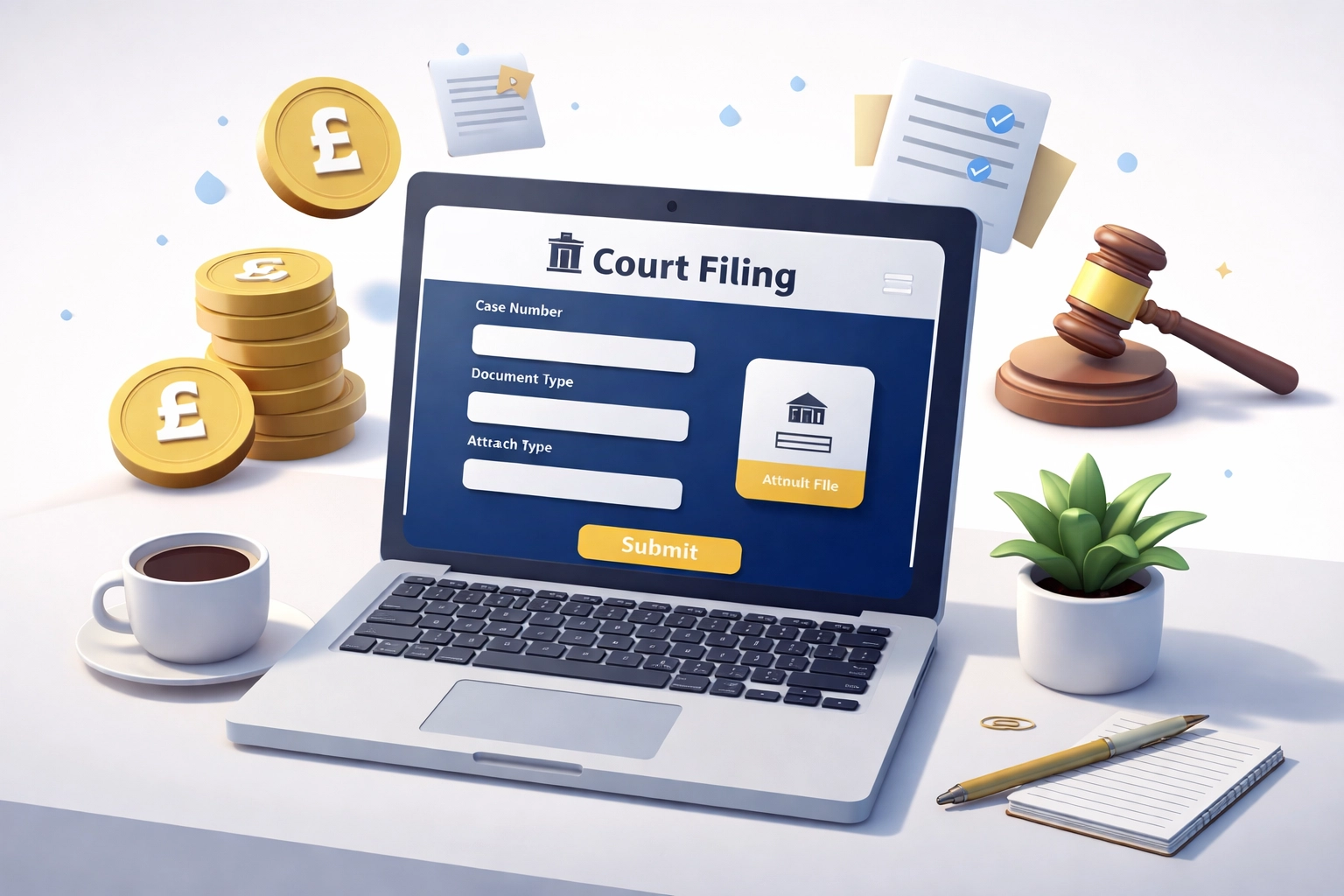
Option A: Money Claim Online (MCOL)
This is the fastest and most cost-effective method for claims up to £100,000. You’ll need to:
- Create an account on the government’s Money Claim Online portal
- Enter your details (you’re the “claimant”) and the debtor’s details (they’re the “defendant”)
- Explain the debt clearly, dates, amounts, what you provided, and previous attempts to recover
- Pay the court fee online
The whole process can be done in under an hour if you have your paperwork ready.
Option B: Paper Form N1
If your claim is over £100,000, or you simply prefer paper, you can submit Form N1 to the County Court Money Claims Centre (CCMCC). It takes longer, but it achieves the same result.
Court Fees for 2026
Court fees are set by the government and can change, but here’s what you’re looking at for 2026:
| Claim Amount | Court Fee |
|---|---|
| Up to £300 | £35 |
| £300.01 to £500 | £50 |
| £500.01 to £1,000 | £70 |
| £1,000.01 to £1,500 | £80 |
| £1,500.01 to £3,000 | £115 |
| £3,000.01 to £5,000 | £205 |
| £5,000.01 to £10,000 | £455 |
The good news? If you win your case, these fees are recoverable from the debtor on top of the original debt.
Step 4: What Happens After You File
Once your claim is issued, the court serves it on the defendant. They then have 14 days to respond (or 28 days if they file an acknowledgement of service).
During this window, one of four things will happen:
- They pay in full – Brilliant. Case closed.
- They offer a settlement – Perhaps a partial payment or payment plan. You can accept or reject this.
- They file a defence – They’re disputing the debt, and it’ll go to a hearing.
- They ignore it completely – This is actually good for you (more on that in a moment).
Step 5: Default Judgment (When They Don’t Respond)
If the defendant ignores your claim entirely, you can apply for a default judgment. This means the court automatically rules in your favour without a hearing.
You can request:
- Immediate payment of the full amount
- Payment by instalments if you think that’s more realistic
Default judgment is one of the most satisfying moments in debt recovery. All that stress, and they couldn’t even be bothered to respond? Now they legally owe you the money, court costs, and potentially interest.
Step 6: If It Goes to a Hearing
Sometimes debtors do file a defence. Maybe they claim the goods were faulty, or the service wasn’t delivered as promised, or they simply dispute the amount.
If this happens, the court will schedule a hearing. For small claims, these are usually informal, held in a private room rather than a courtroom, with a district judge who’ll ask questions and review evidence.
You can represent yourself, but this is often where businesses choose to hire a solicitor for small claims. Having professional representation can make a real difference, especially if the debtor has their own legal support or the facts are complicated.
At Judge Law, we regularly represent clients in civil litigation across Windsor and London. If your case is heading to a hearing, it’s worth having a chat with us about your options.
Step 7: Enforcement (Getting Your Money After Judgment)
Here’s something that catches people off guard: winning a judgment doesn’t automatically mean you get paid. If the debtor still refuses to cough up, you’ll need to take enforcement action.
Your options include:
Warrant of Control
Bailiffs (now called Enforcement Agents) visit the debtor’s premises and seize goods to be sold at auction. The fee is £77 for debts up to £5,000.
Attachment of Earnings Order
If the debtor is employed, the court can order their employer to deduct money directly from their wages and send it to you.
Third Party Debt Order
This freezes the debtor’s bank account and takes the money owed directly from their funds.
Charging Order
This places a charge on the debtor’s property. They can’t sell it without paying you first. For persistent non-payers with property assets, this is incredibly effective.
Each enforcement method has its own application process and fees, but again, these costs are ultimately recoverable from the debtor.

When Should You Get Professional Help?
You absolutely can handle small claims yourself. The system is designed for it.
But there are situations where getting legal help with unpaid invoices makes a lot of sense:
- The debt is close to the £10,000 threshold – Higher stakes mean higher stress.
- The debtor is disputing the claim – A contested hearing benefits from professional representation.
- You’re time-poor – Court paperwork takes time. Solicitors handle it so you can focus on running your business.
- The debtor is a limited company – Corporate debt recovery can have additional complexities.
- You have multiple debts to chase – Systematic commercial debt collection UK processes are more efficient when handled by professionals.
Our debt recovery solicitors Windsor team handles everything from drafting Letters Before Action to representing clients at hearings and coordinating enforcement. If you’re owed money and you’re not sure where to start, get in touch with us for a straightforward conversation about your options.
Final Thoughts: Don’t Let Bad Debtors Win
Unpaid invoices aren’t just annoying, they’re a threat to your business’s survival. Cash flow problems sink more small businesses than almost anything else.
The good news is that the UK legal system gives you real tools to recover what you’re owed. The small claims process is accessible, affordable, and effective.
Yes, it takes some effort. Yes, there’s paperwork involved. But the satisfaction of finally getting paid, and knowing that debtor can’t ignore you anymore, is absolutely worth it.
You did the work. You deserve to be paid. Now let’s make it happen.