
Going through a divorce brings many concerns, but perhaps none more pressing than “what will happen to our assets?” If you’re facing this uncertainty, you’re not alone. Understanding how courts approach asset division in England and Wales can help you prepare for what lies ahead and make informed decisions during this challenging time.
The good news is that while the process may seem complex, there are clear principles and guidelines that govern how assets are divided. Let’s walk through what you need to know.
The Foundation: Fairness, Not Formulas
Unlike some other countries, England and Wales don’t follow a rigid 50/50 split formula. Instead, courts focus on achieving a fair outcome based on your unique circumstances. This approach, established under the Matrimonial Causes Act 1973, gives judges flexibility to consider what’s genuinely right for your situation.
The starting point is often equality, particularly for marriages of substantial length where both parties have contributed equally (whether financially or through homemaking and childcare). However, this starting point can shift significantly based on various factors that we’ll explore below.
Section 25 Factors: What Courts Actually Consider
When determining how to divide assets, courts must consider specific factors laid out in Section 25 of the Matrimonial Causes Act 1973. Understanding these factors can help you anticipate how your case might unfold:
Financial Resources and Needs
Courts examine both parties’ current and future financial situations, including:
- Income and earning capacity
- Existing assets and debts
- Financial obligations and responsibilities
- Any disabilities or health issues affecting earning potential
The welfare of children under 18 takes priority, which often means the primary caregiver may receive a larger share to provide stability for the children.
Length of the Marriage
Short marriages (typically under five years) may see different treatment, especially if one spouse brought substantial pre-marital assets. Longer marriages tend toward more equal division, as both parties are considered to have contributed equally over time.
Age and Health
Courts consider how age and health might affect each party’s ability to:
- Generate income in the future
- Adapt to changed circumstances
- Meet their own housing and living needs
Standard of Living During Marriage
The lifestyle you maintained during marriage influences what courts consider reasonable for both parties post-divorce, though this must be balanced against available resources.
Contributions to the Marriage
This includes both financial contributions and non-financial contributions such as:
- Homemaking and childcare
- Supporting the other spouse’s career
- Caring for elderly relatives
- Managing household finances and administration
What Assets Are Included?
Understanding which assets form part of the “matrimonial pot” is crucial for managing expectations:
Matrimonial Assets (Usually Included)
The Family Home: Almost always included in division, regardless of whose name is on the deeds, as it’s typically the couple’s main asset and provides security.
Savings and Investments: Joint and sole accounts built up during marriage, including ISAs, stocks, shares, and investment portfolios.
Pensions: Often the second-largest asset after the family home. This includes workplace pensions, personal pensions, and state pension entitlements.
Business Assets: Interests in companies or businesses developed during marriage may be valued and divided.
Personal Property: Cars, jewelry, furniture, and other valuable items acquired during marriage.
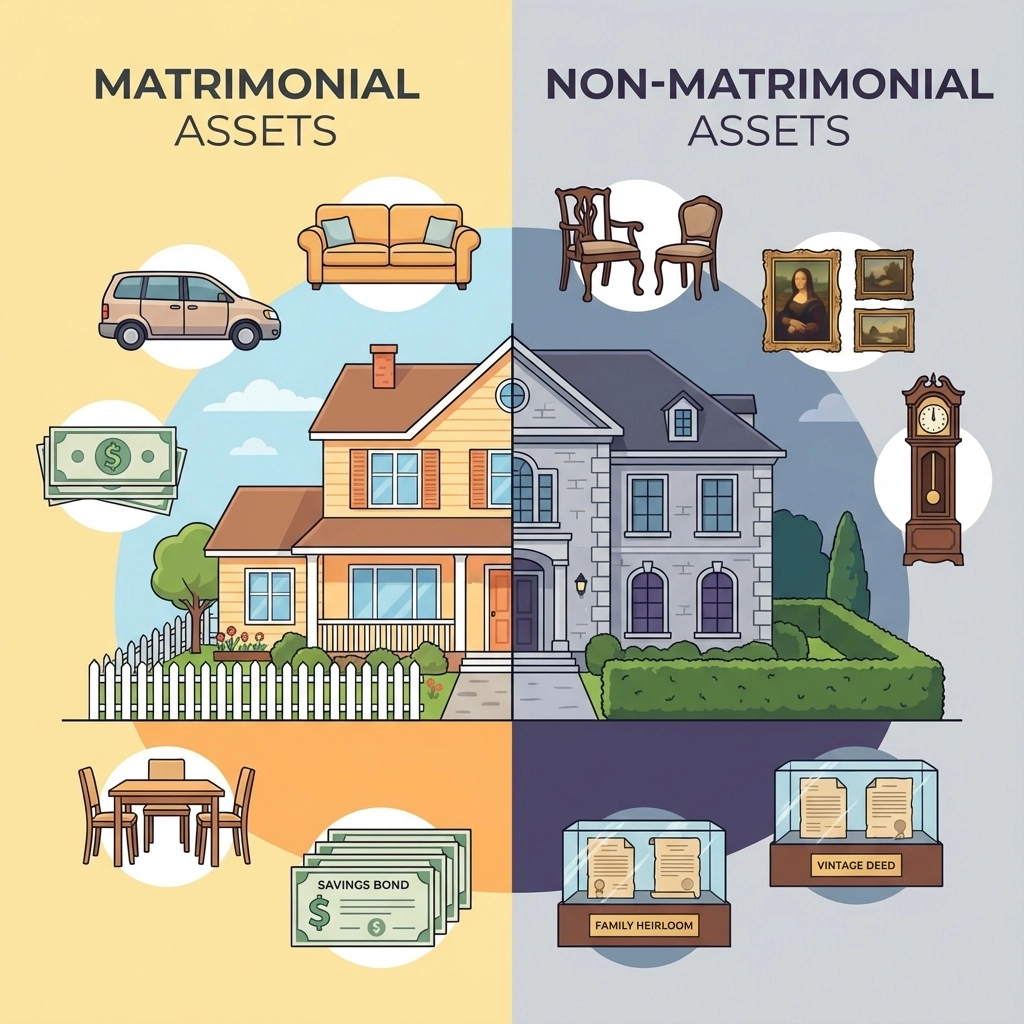
Non-Matrimonial Assets (Sometimes Excluded)
Pre-marital Property: Assets owned before marriage may be “ring-fenced” and excluded from division, particularly in shorter marriages.
Inheritances: Money or property inherited by one spouse is often considered separate, unless it’s been mixed with matrimonial funds or is needed to meet basic needs.
Gifts: Personal gifts to one spouse (excluding gifts between spouses) may be excluded.
However, even non-matrimonial assets can be included if they’re needed to meet either party’s reasonable needs or if they’ve been so intermingled with matrimonial assets that separation is impractical.
Debunking Common Myths
Let’s address some widespread misconceptions about asset division:
Myth 1: “It’s Always 50/50”
Reality: While equality is often the starting point, many settlements deviate from 50/50 based on needs, contributions, and other factors.
Myth 2: “The Breadwinner Gets More”
Reality: Courts value homemaking and childcare equally with financial contributions. The homemaker isn’t considered the “lesser” contributor.
Myth 3: “The House Always Gets Sold”
Reality: In cases involving children, the family home might be transferred to the primary caregiver to provide stability, with the other party receiving a larger share of other assets or future proceeds.
Myth 4: “Bad Behavior Affects the Split”
Reality: Conduct rarely influences financial settlements unless it’s exceptional and directly impacts finances (such as deliberately wasting matrimonial assets).
Needs vs Sharing: The Key Balancing Act
Modern divorce law balances two main principles:
The Needs Principle
This ensures both parties can meet their reasonable needs post-divorce:
- Adequate housing
- Living expenses
- Support for children
- Income replacement where necessary
The Sharing Principle
This recognizes that matrimonial assets should generally be shared equally between spouses who’ve contributed equally to the marriage, whether through earnings or homemaking.
In practice, needs often trump sharing. If there aren’t sufficient assets to meet both parties’ needs and divide everything equally, courts prioritize ensuring both can maintain reasonable living standards.

Special Considerations for Different Asset Types
Pensions
Pensions require special attention as they’re often complex and valuable. Options include:
- Pension sharing: Splitting the pension itself
- Pension offsetting: One spouse keeps the pension while the other receives equivalent assets
- Pension attachment: Future pension payments are split when received
Business Assets
Family businesses present unique challenges:
- Valuation can be complex and disputed
- One spouse may retain the business while the other receives equivalent value
- Ongoing involvement of both spouses may be considered
The Family Home
Several options exist for the family home:
- Immediate sale and division of proceeds
- Transfer to one spouse (often the primary caregiver) with other adjustments
- Mesher orders: Delaying sale until children reach 18 or finish education
Preparing for Asset Division Discussions
Whether you’re negotiating directly with your spouse or heading to court, proper preparation is essential:
Gather Complete Financial Information
- Bank statements for all accounts (typically 12 months)
- Property valuations
- Pension statements and valuations
- Business accounts and valuations
- Investment portfolio statements
- Details of debts and liabilities
Consider Your Future Needs
Think realistically about:
- Housing requirements (considering children’s needs)
- Income requirements and potential
- Pension planning for retirement
- Insurance needs
Explore Settlement Options
Many couples reach agreement through:
- Direct negotiation between divorce solicitors
- Mediation
- Collaborative law
- Arbitration
Only about 10% of cases require a court decision, so exploring settlement options can save time, money, and emotional stress.
Understanding Your Rights and Options
Your divorce entitlements depend entirely on your specific circumstances, but understanding the framework helps you make informed decisions. Courts aim for fairness, not punishment, and recognize that both spouses deserve financial security post-divorce.
If you have children, their welfare takes priority in all decisions. If you’ve been the primary caregiver, courts recognize this contribution and the ongoing need for stability. If you’ve been the main earner, courts acknowledge this contribution while considering both parties’ future needs.
The process doesn’t have to be adversarial. Many couples successfully negotiate financial settlements that work for everyone, particularly when both parties receive proper legal advice and understand their rights and obligations.
Taking the Next Step
Asset division in divorce involves complex legal and financial considerations unique to your situation. While understanding the general principles is helpful, getting personalized advice from experienced family law solicitors ensures you protect your interests and achieve a fair outcome.
If you’re concerned about how your assets might be divided or want to explore your options for reaching a settlement, don’t navigate this alone. Our team at Judge Law understands the emotional and financial challenges you’re facing and can guide you through the process with clarity and compassion.
Contact us today to discuss your situation confidentially and learn how we can help you secure your financial future.