
Here’s something that catches a lot of people off guard: when your decree absolute comes through, your Will doesn’t disappear. It just becomes… partially useless. And in some cases, dangerously outdated.
If you made a Will during your marriage and named your spouse as a beneficiary or executor, that legal document is still sitting there, technically valid, except the bits about your ex are now in a legal grey zone. And “grey zone” is exactly where you don’t want your estate planning to live.
Let’s walk through what actually happens to your Will after divorce, why waiting is risky, and how to make sure your assets end up with the people you actually care about.
What Happens to Your Will When You Get Divorced?
Under UK law, when your divorce is finalised (specifically, when the decree absolute is granted), certain provisions in your existing Will are automatically revoked. Here’s the key bit: any gift to your ex-spouse is treated as if they died before you. The same goes for any appointment of your ex as an executor or trustee.
This sounds reassuring at first, like the law has your back. But here’s the catch: only the parts relating to your ex-spouse are revoked. The rest of your Will stays intact, which can create unexpected problems.
The Problem with “Partial Revocation”
Let’s say your Will originally stated:
- Everything goes to your spouse.
- If your spouse predeceases you, everything goes to your children.
After divorce, provision #1 is revoked. So far, so good. Your ex won’t inherit. But what if you’ve since remarried, or you’ve had a major change in your financial situation? That old Will, written for a completely different version of your life, is still controlling what happens to your estate.

And if you didn’t include any “backup” beneficiaries in your original Will? You could die partially intestate, meaning some or all of your estate would be distributed according to intestacy rules, not your actual wishes.
Example scenario: John and Emma divorced in 2024. John’s Will, written in 2018, left everything to Emma, and if she predeceased him, to their son. After the decree absolute, the gift to Emma is revoked. John starts a new relationship with Claire but never updates his Will. When John dies in 2026, his estate goes entirely to his son, Claire gets nothing, even though John wanted to provide for her.
The Dangerous Middle Ground: “Separated But Not Divorced”
Here’s where things get genuinely risky. If you’re separated but not yet divorced, your existing Will is still fully valid. That means:
- Your estranged spouse is still named as your beneficiary.
- They may still be appointed as your executor.
- If you die before the decree absolute is granted, they inherit according to your Will, or worse, under intestacy rules if you never made one.
A lot of people assume that once they’ve moved out or signed a separation agreement, the “legal stuff” automatically updates. It doesn’t. Until that decree absolute is granted, you’re still legally married, and your Will (if it exists) still treats your spouse as your spouse.
What If You Die During Divorce Proceedings?
If you die after starting divorce proceedings but before the decree absolute, your spouse is still your spouse in the eyes of the law. They’ll likely inherit under your existing Will or, if you died intestate, under intestacy rules (which heavily favour spouses).
The only exception? If you made a new Will during the proceedings that explicitly revoked the old one, but even then, be cautious. Some divorce orders include automatic restraining provisions that prevent you from changing your Will without court permission. Always check with a solicitor before making changes mid-divorce.
| Stage | Status of Your Will | Risk Level |
|---|---|---|
| Married | Fully valid; spouse inherits as planned | Low (if intentions haven’t changed) |
| Separated (no divorce filed) | Fully valid; spouse still inherits | High |
| Divorce proceedings started | Fully valid; spouse still inherits unless new Will made (check court orders first) | High |
| Decree Nisi granted | Fully valid; spouse still inherits | High |
| Decree Absolute granted | Provisions relating to ex-spouse revoked; rest of Will remains | Medium (outdated terms may cause issues) |
| New Will made post-divorce | Your current intentions are legally documented | Low |
What Could Go Wrong If You Don’t Update Your Will?
1. Your Ex Could Still Make a Claim on Your Estate
Even though gifts to your ex-spouse are automatically revoked by divorce, that doesn’t mean they’re entirely out of the picture. Under the Inheritance (Provision for Family and Dependants) Act 1975, your ex-spouse can still make a claim against your estate if they can prove:
- They were financially dependent on you after the divorce.
- The divorce settlement didn’t adequately provide for them.
- They have ongoing financial needs that your estate should meet.
It’s rare, but it happens, especially in cases where maintenance payments were still ongoing or where the financial settlement was incomplete.
2. Your Children Might Not Inherit as You Intended
If your Will was written when you had young children and named your ex-spouse as the guardian or trustee of their inheritance, those provisions are now revoked. That might sound fine, but it also means there’s now a gap in your estate plan.
Who manages the money until your kids turn 18? Who makes decisions about their inheritance? If you don’t update your Will, the court may have to appoint someone, and it might not be the person you’d have chosen.
3. New Partners Are Left with Nothing
You’ve moved on. Maybe you’ve remarried, or you’re in a committed relationship with someone new. But if you die without updating your Will, your new partner has no automatic legal claim to your estate, especially if you’re not married.
In England and Wales, unmarried partners (cohabitants) have no automatic inheritance rights. It doesn’t matter if you’ve been together for 20 years or raised children together. If your Will is outdated or non-existent, they could be left with nothing.
4. Executors and Trustees Are Wrong
Your Will might still name your ex-spouse as your executor (the person who administers your estate) or as a trustee (the person who manages any trusts you’ve set up). Post-divorce, those appointments are automatically revoked, but that means you now have no executor or no trustee unless you named backups.
If there’s no valid executor, your family will have to apply for a “grant of letters of administration,” which adds time, stress, and legal costs to an already difficult situation.
How to Protect Your Estate Properly After Divorce
The good news? Fixing this is straightforward. Here’s what you need to do:
1. Make a New Will (Don’t Just Amend the Old One)
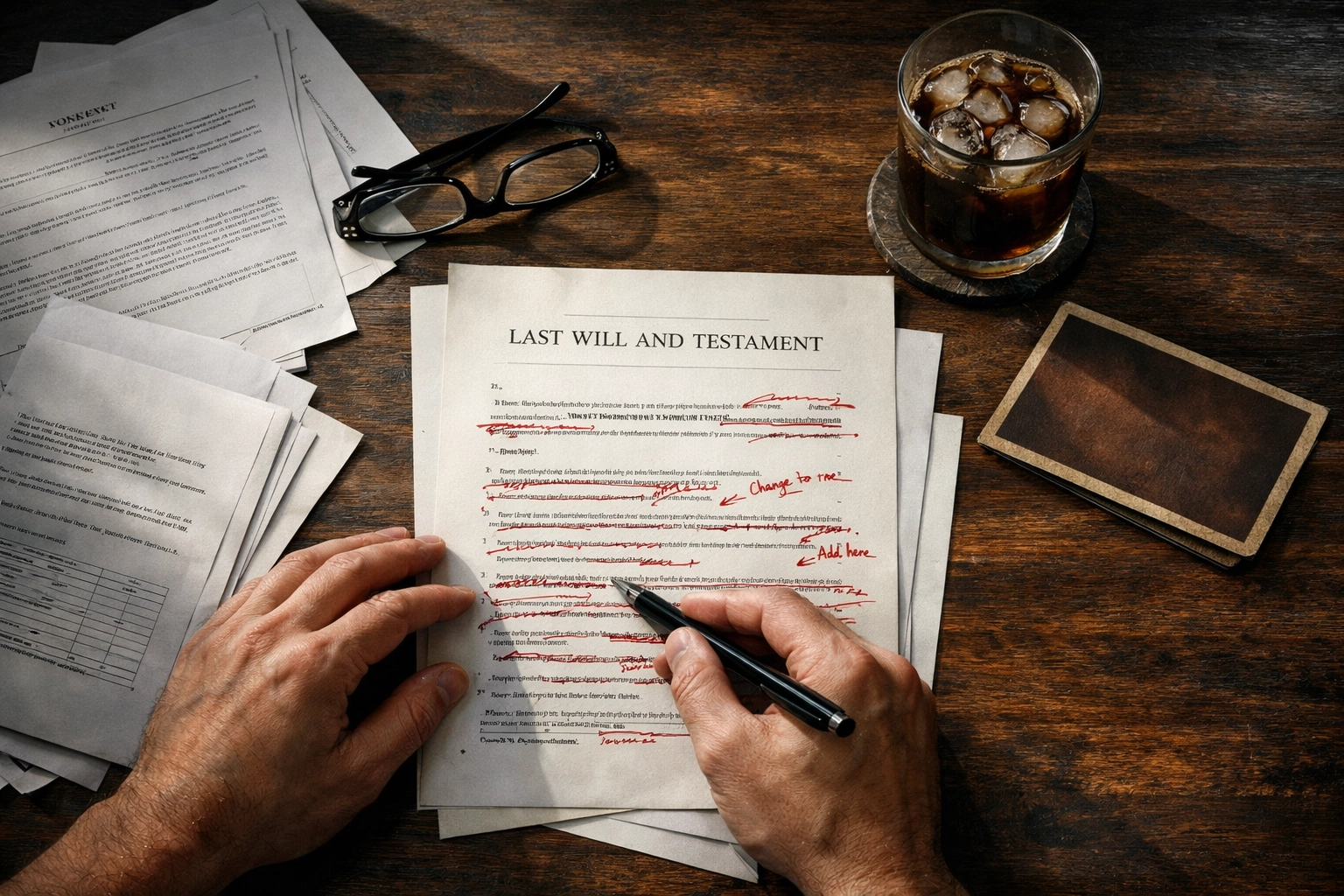
Technically, you could add a codicil (an amendment) to your existing Will, but it’s almost always better to start fresh. A brand-new Will gives you a clean slate and avoids any ambiguity or confusion about what’s still valid.
Your new Will should:
- Clearly revoke all previous Wills and codicils.
- Name your current beneficiaries (children, new partner, other family, charities).
- Appoint executors and guardians (if you have young children).
- Include any specific gifts (property, jewellery, personal items).
- Set up trusts if needed (e.g., for minor children or vulnerable beneficiaries).
Important: Make your new Will after your decree absolute is granted. If you make it during proceedings, there’s a risk it could be challenged or invalidated depending on the court orders in place.
2. Update Your Beneficiaries on Non-Will Assets
Some assets pass outside of your Will, including:
- Life insurance policies with named beneficiaries.
- Pension death benefits (most pensions allow you to nominate who receives them).
- Jointly owned property (if you owned your home as “joint tenants” with your ex, it automatically passes to them, even if you’re divorced).
Contact your life insurance provider, pension administrator, and any financial institutions to update your nominated beneficiaries. This is just as important as updating your Will.
3. Review Your Powers of Attorney
Your Lasting Power of Attorney (LPA) documents allow someone to make decisions on your behalf if you lose mental capacity. If your ex-spouse is named as your attorney, you need to revoke that immediately and appoint someone you trust.
You’ll need to complete new LPA forms for both:
- Property and Financial Affairs LPA (who manages your money and property).
- Health and Welfare LPA (who makes healthcare decisions for you).
These need to be registered with the Office of the Public Guardian to be valid.
4. Get Professional Advice
Estate planning after divorce isn’t just about ticking boxes, it’s about making sure your wishes are crystal clear and legally watertight. A solicitor can help you navigate any complicated situations, like:
- Blended families (children from previous relationships).
- Business assets or complex estates.
- Trusts for vulnerable beneficiaries.
- Inheritance tax planning.
At Judge Law, we work with clients to make sure their Wills reflect their current lives, not the lives they had five years ago. If you’ve recently divorced or you’re in the middle of separation, we can help you put a proper estate plan in place.
Frequently Asked Questions
Does divorce cancel my Will entirely?
No. Divorce only revokes the parts of your Will that relate to your ex-spouse (gifts to them, appointments of them as executor or trustee). The rest of your Will remains valid. However, this can leave gaps or unintended consequences, so it’s always best to make a new Will post-divorce.
What happens if I don’t make a new Will after divorce?
If you die without updating your Will, your estate will be distributed according to the terms of your old Will (minus the revoked provisions about your ex-spouse). If that leaves gaps, or if you never made a Will at all, the intestacy rules will apply. This means the law decides who inherits, not you. Your new partner, stepchildren, or chosen charities could be left out entirely.
Can my ex-spouse still claim on my estate after divorce?
In some circumstances, yes. Even though your ex is no longer automatically entitled to inherit, they can make a claim under the Inheritance Act 1975 if they were financially dependent on you or if the divorce settlement didn’t adequately provide for them. A properly drafted Will and clear financial settlement can minimise this risk.
Do I need to wait until my divorce is final to make a new Will?
It’s generally best to wait until your decree absolute is granted. Some divorce proceedings include court orders that restrict changes to your Will, so making a new one mid-divorce could cause legal complications. Speak to your solicitor if you’re concerned about what happens if you die during the divorce process, they may recommend an interim solution.
What if I remarry after my divorce?
Marriage automatically revokes your Will under UK law (unless the Will was specifically made “in contemplation of marriage” to that person). So if you remarry after divorce, any Will you made post-divorce is now invalid, and you’ll need to make another one. Yes, it’s a lot of Wills. But it’s the only way to make sure your estate plan stays accurate.
Final Thoughts: Don’t Leave It to Chance
Divorce is exhausting. By the time your decree absolute comes through, the last thing you want to think about is more legal paperwork. But here’s the reality: an outdated Will is one of the most common: and most easily avoidable: mistakes people make after divorce.
Your ex might not be in your life anymore, but without a new Will, they could still be in your estate plan. And that’s not a loose end you want to leave hanging.
If you’ve recently divorced, separated, or you’re thinking about ending your marriage, now is the time to get your estate planning sorted. It’s not morbid: it’s practical. And it’s one of the most important things you can do to protect the people you actually care about.
Need help making a new Will after divorce? Our team at Judge Law can guide you through the process and make sure your estate plan reflects your current life. Get in touch for a confidential consultation, or explore our Wills & Estate Planning services to learn more about how we can help you protect your future.