

Losing someone you love is devastating. In those early days, the last thing you want to think about is paperwork, legal deadlines, or admin tasks. But unfortunately, there are some things that simply can't wait.
This guide walks you through the essential legal and practical steps you need to take in the first 30 days after a death in the UK. We've kept it as straightforward as possible: because the last thing you need right now is confusing legal jargon.
If you're feeling overwhelmed, remember: you don't have to do this alone. Our Probate and Estate Administration team is here to help guide you through every step.
The First 5 Days: Register the Death
This is your legal priority. In England and Wales, you must register a death within five days (eight days in Scotland). If the death was expected and a doctor was present, you'll receive a Medical Certificate of Cause of Death (MCCD). Take this to your local Register Office.
You'll need to bring:
- The medical certificate
- The deceased's birth certificate (if available)
- Their NHS medical card
- Marriage or civil partnership certificate (if applicable)
- Proof of address
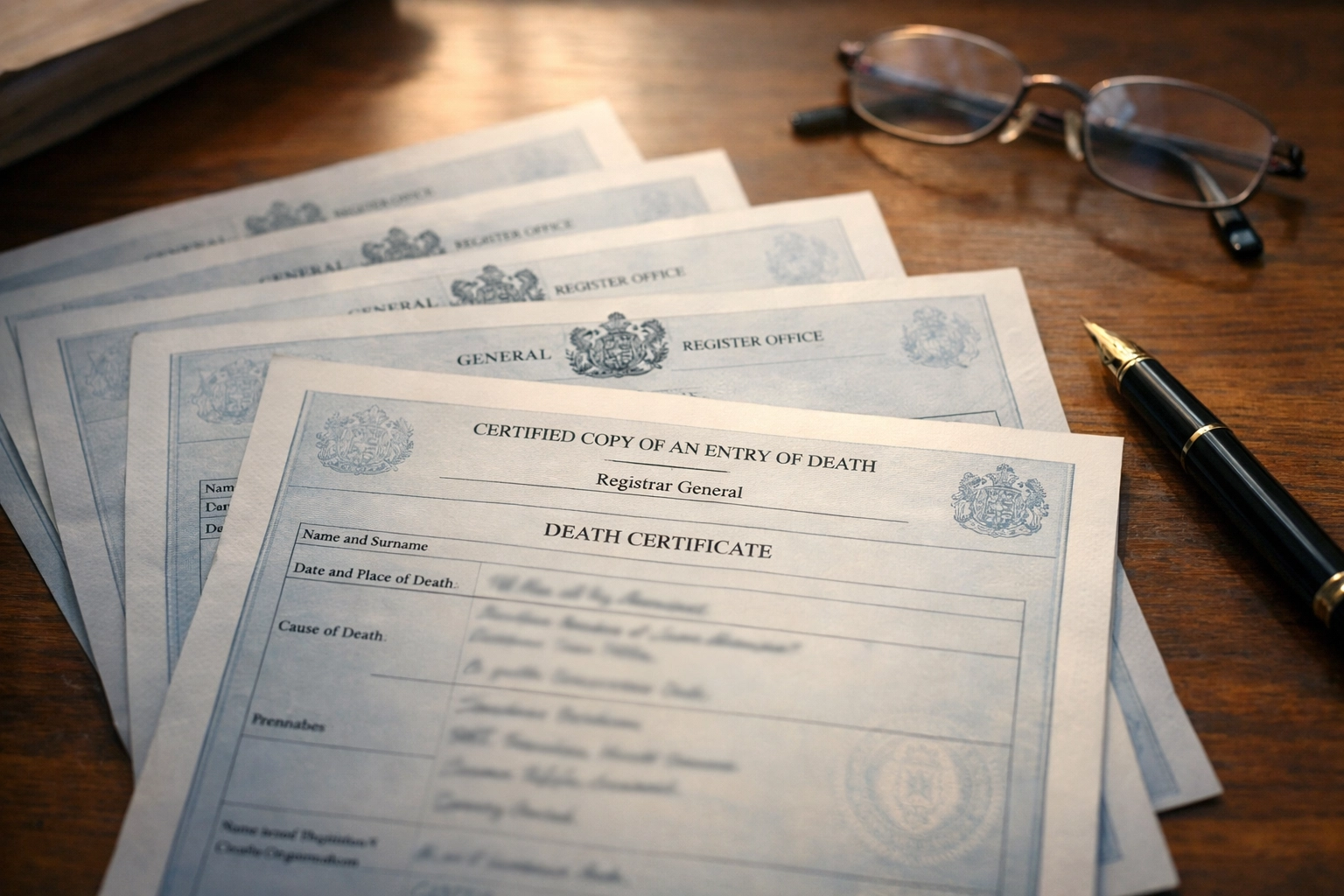
The registrar will give you several documents, including the death certificate. Order extra copies now: you'll typically need 4-6 certified copies for banks, insurance companies, and pension providers. Each copy costs around £12.50, and it's far easier to get them all at once than to reorder later.
Days 1-7: Secure the Essentials
While you're waiting to register the death or immediately after, focus on these practical steps:
Locate the Will
This is critical. Check the deceased's home, safe deposit box, or with their solicitor. The Will names the Executor: the person legally responsible for administering the estate. If you're the Executor, you're now in charge of this process (though you can absolutely get professional help).
If there's no Will, the estate will be distributed according to intestacy rules, and you'll need to apply to become an Administrator instead.
Secure the Property
If the deceased lived alone, make sure their home is locked and secure. Check that:
- Windows and doors are locked
- Heating is on low (to prevent burst pipes)
- Perishable food is removed
- Mail is being collected or redirected
- Valuables like jewellery, cash, or important documents are stored safely
Notify the Immediate Circle
Let close family and friends know what's happened. If the deceased had a pet, arrange care immediately. Cancel any upcoming medical appointments or care visits.
Days 7-14: Start Notifying Key Organisations
This is when the admin begins in earnest. You'll need to inform several organisations about the death. The UK government's Tell Us Once service is a lifesaver here: it allows you to notify multiple government departments with a single notification.
Through Tell Us Once, you can notify:
- HM Revenue & Customs (HMRC)
- Department for Work and Pensions (DWP)
- Driver and Vehicle Licensing Agency (DVLA)
- Local council (for council tax, housing benefit, blue badges)
- Passport Office
You can access Tell Us Once through the registrar when you register the death, or online via GOV.UK.
Financial Institutions
Contact the deceased's banks, building societies, and credit card companies. You'll need to:
- Provide a copy of the death certificate
- Ask them to freeze accounts temporarily
- Request current balances (you'll need these figures for probate)
- Check if there are any direct debits that need cancelling
Don't close accounts yet: you might need them to pay ongoing bills or receive refunds.

Employers and Pensions
If the deceased was working or receiving a pension, notify:
- Their employer (to claim any outstanding salary or death-in-service benefits)
- All pension providers (state and private)
- Life insurance companies
Many life insurance policies and workplace pensions include death benefits that need to be claimed within specific timeframes.
Utilities and Subscriptions
Cancel or transfer:
- Utility bills (gas, electricity, water)
- Phone and broadband contracts
- TV licence
- Subscription services (Netflix, gym memberships, magazine subscriptions)
- Insurance policies (home, car, health)
Keep a record of final meter readings if you're closing down a property.
Days 14-30: Understanding Probate
By now, you should have a clearer picture of the deceased's assets and debts. This is when you need to decide whether you need to apply for probate.
Do You Need Probate?
You'll need to apply for a Grant of Probate (or Letters of Administration if there's no Will) if the estate includes:
- Property or land owned solely by the deceased
- Shares or investments above a certain threshold
- Bank or building society accounts over £5,000-£50,000 (the threshold varies by institution)
You won't need probate if:
- Everything was jointly owned and passes automatically to the survivor
- The estate is very small (under £5,000)
- Assets are held in trust
Gathering Estate Information
Start creating a comprehensive list of:
- All assets (property, cars, savings, investments, personal possessions)
- All debts (mortgages, loans, credit cards, outstanding bills)
- The value of everything (you may need professional valuations for property or valuable items)
This is called "estate valuation," and it's essential for the probate application and for calculating any Inheritance Tax due.

Inheritance Tax Considerations
If the estate is worth more than £325,000 (or £500,000 if it includes the family home being passed to direct descendants), Inheritance Tax may be due. The current rate is 40% on anything above the threshold.
You must complete HMRC forms and pay any tax due before you can get the Grant of Probate. This is complex stuff, and it's where most people benefit from professional estate planning advice.
Starting the Probate Application
If probate is needed, you can apply:
- Online through GOV.UK (£273 fee)
- By post using form PA1P (£273 fee)
- Through a solicitor (fees vary but remove the burden from you)
The application requires:
- The original Will (if there is one)
- The death certificate
- Details of the estate's assets and debts
- Completed Inheritance Tax forms
The probate process typically takes 4-6 months, though complex estates can take over a year.
What Can Wait (and What Absolutely Can't)
Can Wait:
- Clearing out the deceased's home (take your time with this)
- Selling property or possessions
- Distributing inheritances to beneficiaries
- Closing social media accounts
Can't Wait:
- Registering the death (5-day legal deadline)
- Securing the property
- Cancelling care services
- Notifying banks to prevent fraud
- Applying for probate within the required timeframe

You Don't Have to Do This Alone
These first 30 days are about getting the foundations in place. You're not expected to have everything finished: probate is a marathon, not a sprint.
If you're feeling overwhelmed by the legal complexity, conflicting advice from family members, or simply the emotional weight of it all, that's completely normal. Many people find that bringing in a professional to handle the probate process allows them to focus on grieving and supporting their family.
Our Probate and Estate Administration solicitors work with families across Windsor, West London, and beyond to take the administrative burden off your shoulders. We can handle everything from the initial application through to final distribution of the estate.
Whether you need full representation or just some guidance on the trickier aspects, we're here to help. You can learn more about our full range of Wills and Estate Planning services to see how we support families through every stage of estate administration.
The first 30 days are tough, but you're taking the right steps by getting informed. Be kind to yourself, ask for help when you need it, and remember: one step at a time.