

You’ve collected the keys. The removal van has left. You’re officially in your new home in Windsor or settling into your London flat. For most buyers, this feels like the finish line, but legally speaking, your property transaction isn’t quite complete yet.
What happens in the weeks following completion is just as important as everything that came before it. Post-completion conveyancing is the final chapter of your property journey, and getting it right protects your ownership, your investment, and your future plans.
The “Completion” Misconception
Conveyancing
Get an instant conveyancing quote
See your fixed-fee legal costs and Stamp Duty on screen in about a minute, with the full breakdown emailed to you. No obligation.
There’s a common misunderstanding that “completion” means everything is done. In everyday language, completion refers to the day money changes hands, keys are collected, and you move in. But in legal terms, that’s just the exchange of beneficial ownership.
Full legal ownership, the kind that appears on official records and protects you against fraud or disputes, requires additional steps. These steps are collectively known as post-completion work, and they’re not optional extras. They’re legal requirements that cement your position as the registered owner.
Across West London and the Home Counties, including areas like Windsor where the property market remains buoyant, these formalities ensure your transaction is watertight. Without them, you may own the property in practice, but not fully in law.
What Is Post-Completion Conveyancing?
Post-completion conveyancing refers to all the legal and administrative tasks that must be completed after the day of completion. These tasks are carried out by your solicitor and typically take between two and six weeks to finalise.
The work falls into several categories:
Registration with HM Land Registry – Your solicitor must apply to register your ownership (and any mortgage charge) with the Land Registry. This is what updates the public record and ensures your name appears on the official title register.
Stamp Duty Land Tax (SDLT) submission – If your property purchase triggered an SDLT liability, your solicitor must submit a Land Transaction Return to HMRC and pay the tax within 14 days of completion. This generates a certificate that the Land Registry requires before registering your ownership.
Leasehold formalities – If you’ve purchased a leasehold property, your solicitor must serve notice on the landlord or management company, comply with any deed of covenant requirements, and ensure the lease terms are satisfied.
Redemption of mortgages – If the seller had a mortgage, your solicitor ensures it’s paid off and that the charge is removed from the title register.
Accounting to the client – Once all tasks are complete, your solicitor will send you a completion statement, your updated title documents, and confirmation that everything has been registered.
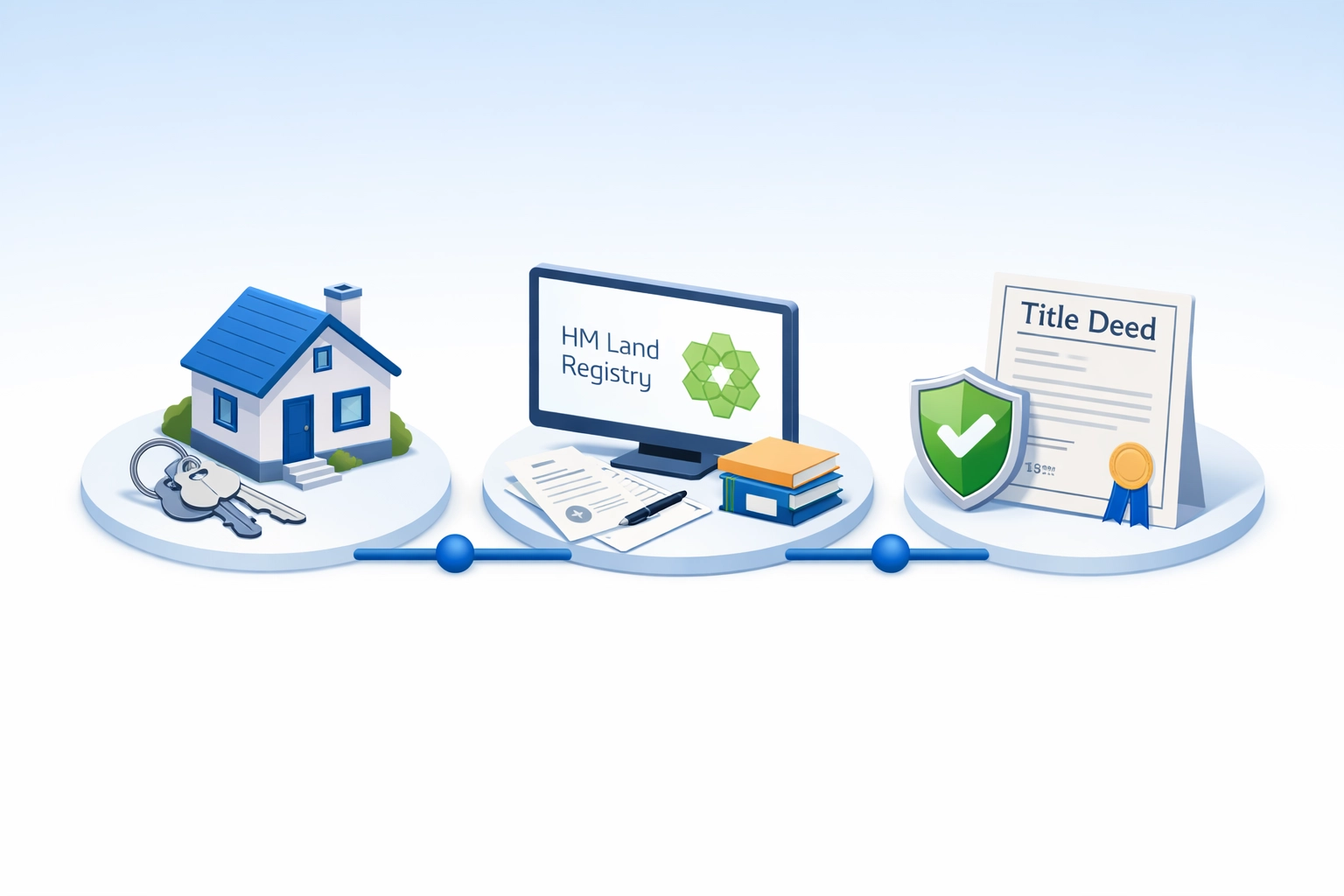
The Post-Completion Checklist: What Your Solicitor Does
Here’s a detailed breakdown of the typical post-completion tasks, presented in the order they’re usually handled:
| Task | Responsibility | Deadline | Purpose |
|---|---|---|---|
| SDLT Return Submission (Form SDLT1) | Buyer’s Solicitor | Within 14 days of completion | Report the transaction to HMRC and pay any Stamp Duty liability. Without this, the Land Registry will reject the application. |
| Obtain SDLT5 Certificate | Buyer’s Solicitor | Issued by HMRC after submission | Certificate required to prove tax compliance. Sent to Land Registry with application. |
| Application for Registration (Form AP1) | Buyer’s Solicitor | Priority period (usually 30 business days) | Register the transfer of ownership and any mortgage charge. Delays can result in loss of priority. |
| Submit Transfer Deed (TR1) | Buyer’s Solicitor | With AP1 application | The signed legal document transferring ownership from seller to buyer. |
| Submit Mortgage Deed/Charge | Buyer’s Solicitor | With AP1 application | If applicable, registers the lender’s legal charge over the property. |
| Notice of Transfer (Leasehold) | Buyer’s Solicitor | As required by lease terms | Notify the landlord or management company of the change in ownership. Often accompanied by a fee. |
| Notice of Charge (Leasehold) | Buyer’s Solicitor | As required by lease terms | Notify the landlord or management company that a mortgage charge has been registered. |
| Deed of Covenant (Leasehold) | Buyer’s Solicitor | As required by lease terms | Legal agreement binding the buyer to lease obligations. Required for many leasehold properties. |
| Redeem Seller’s Mortgage | Seller’s Solicitor | On or shortly after completion | Ensure the seller’s outstanding mortgage is repaid and the charge removed from the title. |
| Account to Seller | Seller’s Solicitor | Within days of completion | Transfer net sale proceeds to the seller after deducting fees, estate agent costs, and mortgage redemption. |
| Provide Completion Documents to Buyer | Buyer’s Solicitor | After registration confirmed | Supply updated title register, official copies, and completion statement to the client. |
You can find further guidance on the Land Registry application process on the HM Land Registry website, and information about Stamp Duty Land Tax rates and deadlines on the GOV.UK SDLT pages.
Why Post-Completion Work Is Critical
It’s tempting to think that once you’ve moved in, the legal side can wait. But post-completion work protects you in several important ways.
Legal Title vs. Equitable Interest
When contracts exchange and completion happens, you acquire what’s known as an equitable interest in the property. You have the right to occupy it, and you’re treated as the owner in practical terms. But until your ownership is registered with the Land Registry, you don’t hold legal title.
Legal title is what matters in disputes, in the event of fraud, or if there’s a competing claim to the property. Registration establishes you as the legal owner on the public record, which is recognised by courts, lenders, and anyone else who searches the title.
In areas like Windsor, where property values are high and transactions involve significant sums, ensuring you hold legal title is essential. The difference between equitable and legal ownership may sound technical, but it can have serious consequences if something goes wrong.

Protection Against Fraud
Property fraud, where criminals impersonate owners and attempt to sell or remortgage properties, remains a real threat in London and the South East. One of the best defences against fraud is prompt registration with the Land Registry.
Once your ownership is registered, you can also sign up for the Land Registry Property Alert Service, which notifies you if anyone tries to change or access your title. But this protection only works once you’re on the register.
Future Sale and Remortgage
If you decide to sell your property or remortgage in the future, any gaps or errors in your title registration can cause delays or even derail the transaction.
For example, if your purchase wasn’t properly registered, or if SDLT wasn’t paid at the time, these issues will resurface when you try to sell. Buyers’ solicitors will raise requisitions, and you may need to resolve historical problems before the sale can proceed.
This is particularly relevant in Windsor and West London, where the property market moves quickly and buyers expect smooth, efficient transactions. Getting your post-completion work done properly now saves hassle later.
Leasehold Compliance
If you’ve purchased a leasehold property, common in London, there are usually specific lease provisions about notifying the landlord of a change of ownership and any mortgage.
Failure to serve the required notices can result in:
- Breach of lease terms
- Difficulty claiming through your buildings insurance
- Problems selling the property in future
- The landlord refusing to deal with you as the recognised leaseholder
Your solicitor ensures these notices are served correctly and that you’re formally recognised by the freeholder or management company.
Post-Completion Timeline: What Happens and When
Here’s a typical timeline showing what happens in the weeks after completion:
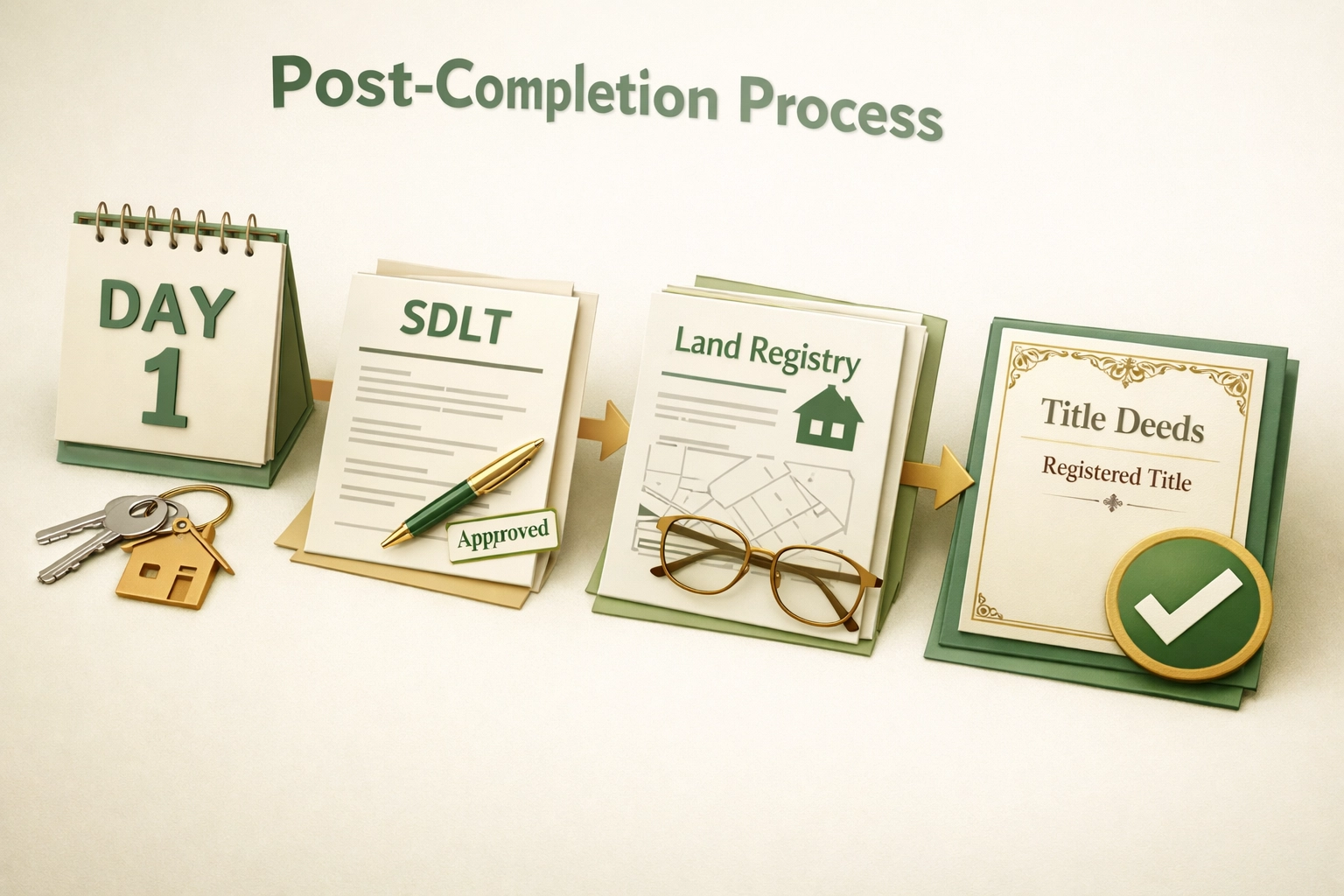
Day 1 (Completion Day)
- Funds transferred
- Keys released
- Buyer takes possession
Days 1–14
- Seller’s solicitor redeems seller’s mortgage
- Buyer’s solicitor submits SDLT return to HMRC
- Payment of Stamp Duty Land Tax
Days 7–14
- HMRC issues SDLT5 certificate
- Buyer’s solicitor prepares application for registration
Days 14–30 (Priority Period)
- Application submitted to Land Registry (Form AP1)
- Transfer deed, mortgage deed, and SDLT certificate lodged
- Leasehold notices served (if applicable)
Days 30–60
- Land Registry processes application
- May raise requisitions if further information needed
- Title register updated to reflect new ownership and charge
Day 60+
- Official copies issued to buyer
- Completion statement sent
- Original documents provided (if applicable)
While this is a typical timeline, delays can occur, especially if the Land Registry is busy or if there are complications with the application. Your solicitor will keep you updated and chase progress where needed.
At Judge Law, our conveyancing team works across Windsor and London, and we know how important it is to finalise post-completion work efficiently. If you’re concerned about the progress of your transaction, our Post Completion Conveyancing Support service can review your case and ensure everything is on track.
What If Post-Completion Work Isn’t Done?
Unfortunately, there are cases where post-completion work is delayed or never completed. This can happen if a law firm closes, if there are staffing issues, or if files are simply overlooked.
The consequences can include:
- Your ownership not appearing on the Land Registry
- Exposure to fraud or competing claims
- Difficulty selling or remortgaging
- SDLT penalties and interest from HMRC
- Breach of lease terms (for leasehold properties)
If your transaction completed months or even years ago and you’ve never received confirmation of registration, it’s worth checking your title. You can order official copies of your title register from the Land Registry to see what’s recorded.
If there are problems, a solicitor can apply to register your ownership retrospectively and resolve any outstanding issues. Our Conveyancing Hub provides resources and support for clients who need help with delayed or incomplete transactions.
FAQs
How long does post-completion work take?
Typically between two and six weeks, depending on the complexity of the transaction and how busy the Land Registry is.
Will I be notified when everything is complete?
Yes. Your solicitor should send you a completion statement, updated title documents, and confirmation that your ownership has been registered.
What happens if my solicitor doesn’t complete the post-completion work?
You can instruct a new solicitor to take over. If the original firm has closed or been intervened into, the new solicitor can retrieve your file and complete the outstanding work.
Do I need to do anything after completion?
In most cases, no. Your solicitor handles everything. But it’s worth keeping copies of all paperwork and checking that you receive final confirmation within a few weeks of moving in.
Can I check my title register myself?
Yes. You can order official copies from the Land Registry for £3 per title. This shows who the registered owner is and whether any charges (mortgages) are registered.
What if I didn’t pay Stamp Duty at the time?
SDLT must be paid within 14 days of completion. If it wasn’t, HMRC will charge interest and penalties. A solicitor can help you submit a late return and settle the liability.
Does post-completion work apply to cash purchases?
Yes. Even if you didn’t have a mortgage, you still need to register your ownership with the Land Registry and pay any applicable SDLT.
Final Thoughts
Moving day is a milestone, but it’s not the finish line. Post-completion conveyancing is the essential final step that turns your house move into a legally secure property transaction.
Whether you’re settling into a period home in Windsor or a modern apartment in West London, ensuring that your ownership is properly registered and all formalities are completed protects your investment and gives you peace of mind.
If you have questions about your conveyancing transaction, or if you’re concerned that post-completion work hasn’t been finalised, get in touch. Our team at Judge Law is here to help guide you through every stage of your property journey: from instruction to final registration.
You can also explore our articles and guides for more information on property law, conveyancing, and what to expect when buying or selling in 2026.