
If you have been following the news lately, you’ll know that the landscape of UK immigration changed significantly on March 1, 2026. For those seeking safety and a new beginning in the UK, the rules of the game haven’t just shifted, they’ve been completely rewritten.
The biggest change? The end of the traditional five-year refugee status. In its place, the Home Office has introduced what many are calling the “30-Month Rule.” If you’re feeling a bit overwhelmed or anxious about what this means for your future, you aren’t alone. At Judge Law, we’ve been fielding calls all week from families and individuals trying to make sense of these new “Core Protection” grants.
Let’s sit down and break this down together. We’ll look at what’s changed, why it’s happening, and, most importantly, how you can prepare for the road ahead.
What Exactly Is the 30-Month Rule?
For decades, getting refugee status in the UK usually meant a five-year window of stability. After those five years, you could typically apply for Indefinite Leave to Remain (ILR). It was a clear path toward permanent settlement and, eventually, citizenship.
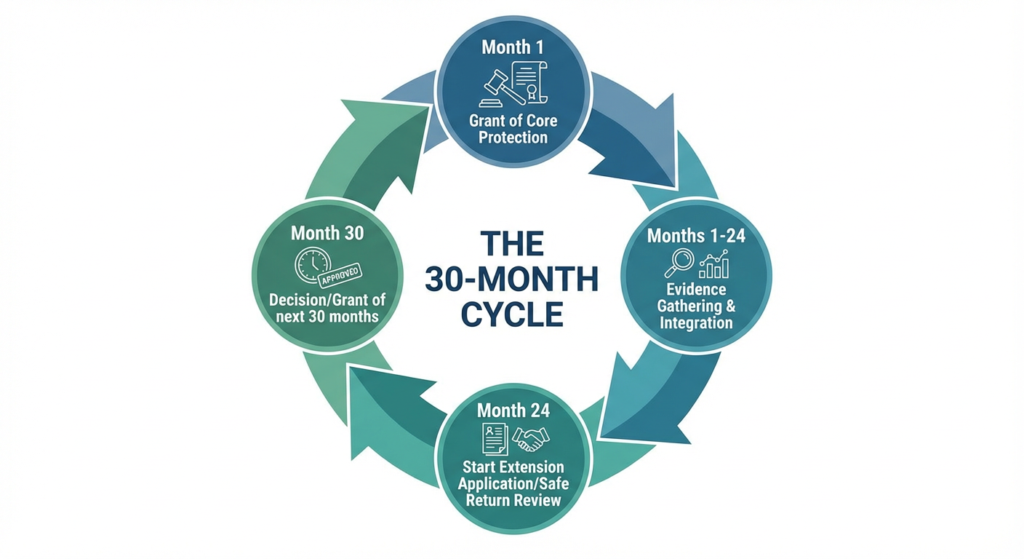
As of March 2026, that path has a new, much shorter first step. New refugees now receive 30 months of “Core Protection” at a time. This isn’t a permanent grant; it’s a temporary one.
Think of it like a rolling lease rather than a mortgage. Every two and a half years, the Home Office will look at your case again. They want to see if the reasons you fled your home country still exist. If they decide your home country is now “safe,” you might be expected to return.
The Breakdown: Old vs. New
| Feature | Old System (Pre-March 2026) | New System (Current) |
|---|---|---|
| Initial Grant Length | 5 Years | 30 Months (2.5 Years) |
| Status Type | Long-term Protection | “Core Protection” (Temporary) |
| Review Frequency | Once at the 5-year mark | Every 30 months |
| Path to Settlement | 5 years to ILR | Potential 10-year path (variable) |
| Review Focus | Criminality/Integration | “Safe Return” Review |
Why the Change? The “Denmark Model” Explained
You might be wondering why the UK government decided to make such a drastic shift. The inspiration comes from what’s known as the “Denmark Model.” Denmark was one of the first European nations to pivot toward the idea that refugee status should be temporary by default.
The logic behind the policy is that protection should last only as long as the danger does. If a conflict ends or a political regime changes in your home country within that 30-month window, the UK government now has a mechanism to review whether you still need to be here.
While the government argues this helps manage net migration figures, we know it adds a huge layer of stress for people trying to build a life here. It’s hard to settle into a job or put down roots when you feel like there’s a countdown clock running in the background. That’s why having a solid legal team behind you is more important than ever.

The “Safe Return” Review: What to Expect
The most nerve-wracking part of the new 30-month rule is the Safe Return Review. About six months before your 30-month permit expires, the process starts.
The Home Office will assess:
- Country Conditions: Has the situation in your home country improved?
- Personal Circumstances: Is there a specific reason why you personally are still at risk, even if the general situation has improved?
- Ongoing Ties: Have you built a life in the UK that would make removal a breach of your human rights (Article 8)?
The burden of proof has shifted. In the past, the Home Office had to prove it was safe for you to go back. Now, the emphasis is heavily on the individual to show why they still need protection. This is where expert immigration advice becomes your greatest asset.
How to Prepare: Gathering Your Evidence
Because your status will be reviewed every 2.5 years, you can’t afford to wait until month 29 to start thinking about your extension. You need to be a “document collector” from day one.
Here is what you should be keeping in your “Safety File”:
- News Reports: Keep a log of major news events from your home country. If there are reports of continued persecution of people in your situation, save them.
- Personal Communication: If you receive threats or news from home via messaging apps or letters that show the danger persists, back them up and keep them safe.
- Expert Reports: Sometimes, general news isn’t enough. You may need a professional “Country Expert” to write a report explaining why the “improvements” the Home Office sees aren’t real for someone in your position.
- Integration Evidence: Show how you are contributing to the UK. Employment contracts, letters from community leaders, and records of your children’s schooling can all help build a case for why you should stay.
Legal Challenges and the Law Society
It is worth noting that this policy is currently under a lot of fire. The Law Society has pointed out that this 30-month cycle might actually breach Article 34 of the 1951 Refugee Convention, which says countries should help refugees become naturalized citizens.
By keeping people in a state of “temporary” limbo, the UK is making it much harder for people to truly integrate. At Judge Law, we stay on top of these high-level legal challenges. If a court ruling changes how these 30-month reviews are handled, we are the first to know.

The Human Side of the 30-Month Rule
We know that “legal status” is about more than just a piece of paper or an eVisa. It’s about your ability to sleep at night. It’s about being able to tell your employer that you’ll be here next year. It’s about your children feeling like they belong in their classrooms.
The new policy can feel like a “NO” before you’ve even had a chance to ask. But remember: Temporary doesn’t mean “ending.” It just means we have to be more diligent. Many people will successfully renew their 30-month protection multiple times.

How Judge Law Can Help
Navigating asylum renewals is complex, and the stakes couldn’t be higher. We specialize in taking the “legal-ese” and turning it into a clear, actionable plan for our clients.
If you or a loved one are currently on a 30-month “Core Protection” visa, here is how we can support you:
- Early Strategy Sessions: Don’t wait for the Home Office to send you a letter. We can review your case now and tell you exactly what evidence you need to start gathering.
- Safe Return Submissions: We prepare the legal arguments to show the Home Office exactly why your home country remains unsafe.
- Human Rights Claims: If your life is now firmly rooted in the UK, we can explore Article 8 claims to ensure your family stays together.
- Switching Routes: Sometimes, there are better options. If you are a high-skilled worker or have other family ties, we can look at moving you from “Refugee Status” to a more stable work or family visa.
Final Thoughts: Stay Calm, Stay Informed
The shift to the 30-month rule is a major change, but it isn’t an impossible hurdle. The UK still has a duty to protect those in danger, and the “Safe Return” review is a process that can be successfully navigated with the right preparation.
You don’t have to carry this worry alone. If you’re concerned about your upcoming review or want to know more about how the March 2026 changes affect you, reach out to us. Check out our reviews to see how we’ve helped others in similar situations, or visit our immigration page for more resources.
We’re here to make sure your temporary status leads to a permanent future.
Disclaimer: This blog post provides general information and does not constitute formal legal advice. Immigration laws are subject to frequent changes. For advice specific to your circumstances, please consult with a qualified legal professional at Judge Law.