
You’ve made it this far: five years of visas, paperwork, and waiting. You’ve secured your Indefinite Leave to Remain (ILR) or EU Settled Status. Now comes the final chapter: becoming a British citizen.
This isn’t just another immigration hurdle. It’s the moment you swap temporary permission for permanent belonging. You get a British passport, full voting rights, and the security of knowing the Home Office can never ask you to leave.
But here’s the catch: the rules are changing in April 2026, and if you’re not careful about timing, you could get caught in a tougher system. Let’s walk through exactly what you need to do: and when you need to do it.
Why British Citizenship Matters More Than ILR
ILR is brilliant. It gives you the right to live and work in the UK without time limits. But citizenship is the upgrade that locks in your future.
With British citizenship, you can:
- Travel on a UK passport (no more visa applications)
- Vote in all elections and stand for public office
- Pass citizenship automatically to your children born abroad
- Never worry about residency requirements or absence rules again
- Access certain jobs that require British nationality (civil service, security roles)
ILR can technically be revoked if you spend more than two years outside the UK in a single stretch. Citizenship can’t. It’s yours for life (barring extreme circumstances like fraud or terrorism convictions).
The 12-Month Rule: Your Mandatory Waiting Period
Here’s what trips people up: you can’t apply for citizenship the moment you get ILR. In most cases, you need to wait a full 12 months after receiving your ILR before you’re eligible.
This rule exists to show the Home Office that you’ve continued to live in the UK and integrated into British society. It’s a final test of commitment.
The exception? If you’re married to or in a civil partnership with a British citizen, you can apply for citizenship immediately after receiving ILR: no 12-month wait required. But you’ll still need to meet a three-year residence requirement instead of the standard five years.

The Five-Year Residence Requirement
To qualify for British citizenship through naturalisation, you must have lived in the UK for at least five years before the date of your application.
But it’s not just about being physically present. The Home Office is strict about:
- Absence limits: You can’t have been outside the UK for more than 450 days during the five-year period, and no more than 90 days in the final 12 months.
- Continuous residence: Your time in the UK must be largely unbroken. Long gaps will raise red flags.
- ILR requirement: You must have held ILR (or Settled Status) for at least 12 months at the time of application.
If you originally entered the UK on spouse and partner visas, or through investor and talent visas, make sure your absence history is meticulously documented. The Home Office will check your passport stamps, travel records, and any employment or tax gaps.
The “Good Character” Requirement: What Actually Counts
This is where citizenship applications get serious. Unlike ILR, where the focus is mainly on immigration compliance, citizenship adds a moral dimension. You need to prove you’re of “good character.”
The Home Office looks at:
- Criminal convictions: Even spent convictions can matter. A minor offence from years ago might not disqualify you, but a recent fraud conviction almost certainly will.
- Tax compliance: Unpaid taxes or tax evasion will sink your application.
- Immigration history: Previous visa breaches, even if you’ve since obtained ILR, can still haunt you.
- Financial conduct: Bankruptcy, County Court Judgments (CCJs), or significant unpaid debts may raise concerns.
- Dishonesty: Lying on previous applications: even about minor details: is treated more harshly than the original issue.
If you’ve got something in your past that worries you, don’t bury it. Disclosure is always better than discovery. Our leading immigration solicitors have seen clients refused not because of the issue itself, but because they failed to declare it.
The Language and Life in the UK Tests
You’ll need to prove two things before you apply:
English Language Proficiency
You must demonstrate English at B1 level on the Common European Framework of Reference (CEFR). This means you can:
- Hold a simple conversation
- Understand straightforward information
- Express opinions and explain plans
You can prove this by:
- Passing an approved English language test (IELTS, Trinity, etc.)
- Holding a degree taught in English from a UK or recognised overseas university
Important: If you’ve already met this requirement for ILR, you typically don’t need to retake the test for citizenship: but keep your certificate. The Home Office will want to see it.
Life in the UK Test
This is a 24-question multiple-choice test covering British history, culture, traditions, and the political system. You need to score at least 75% (18 correct answers) to pass.
The test certificate doesn’t expire, so if you passed it years ago for ILR, it’s still valid. But if you haven’t taken it yet, book your slot early: test centres can get busy, and you need the certificate before you submit your application.
April 2026: The Changes You Need to Know About
The government is tightening the rules, and the changes kick in this April. If you’re close to eligibility, timing matters.
Here’s what’s changing:
- English language requirement increases from B1 to B2: This is a noticeable jump. B2 means you need to communicate fluently in most situations, understand complex texts, and express yourself clearly on abstract topics.
- New income threshold: You’ll need to prove you’ve earned at least £12,570 per year for three to five years before applying.
- Tougher Life in the UK Test: The government plans to make the test more challenging, though exact details haven’t been confirmed yet.
The key question: will these changes apply to you?
If you already have ILR before April 2026, you’re likely in the clear. The citizenship pathway under the British Nationality Act 1981 is separate from Immigration Rules, so existing ILR holders should be protected. But if you’re still working toward ILR and won’t have it by April, you could face the stricter requirements when you eventually apply for citizenship.
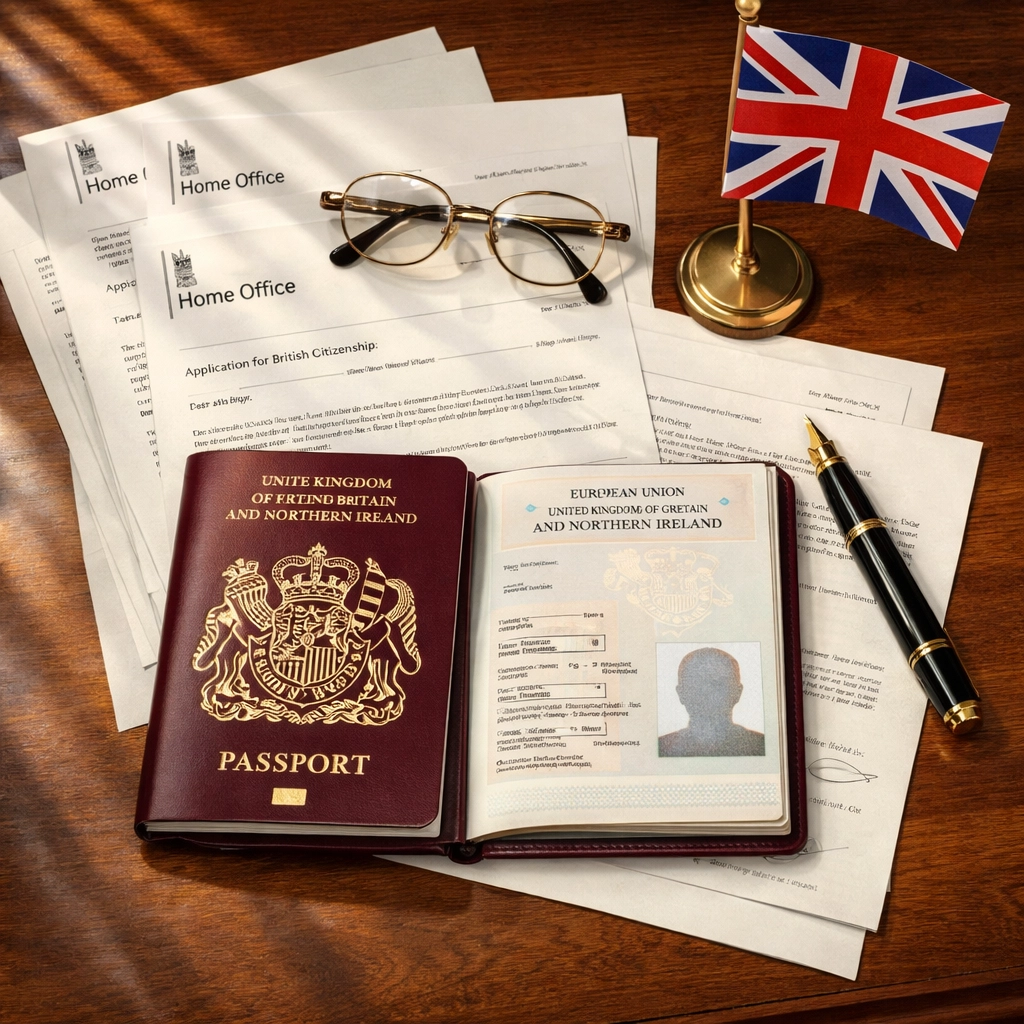
Documents You’ll Need
The Home Office doesn’t accept excuses for missing paperwork. Gather these documents before you start your application:
- Passports: Every passport you’ve held during your qualifying period, even expired ones.
- Proof of ILR or Settled Status: Your Biometric Residence Permit (BRP) or a letter from the Home Office.
- Travel history: A complete record of every trip you’ve taken outside the UK in the past five years. Dates, destinations, and reasons for travel.
- English language certificate: If you took a test, bring the original certificate.
- Life in the UK Test pass certificate: The original, not a copy.
- Proof of residence: Utility bills, council tax statements, tenancy agreements, or mortgage documents covering the five-year period.
The Two Referee Requirement
You’ll need two referees to support your application. These aren’t character witnesses in the traditional sense: they’re confirming your identity and that you’re a person of good character.
Referee 1 must be a “professional person” such as:
- A solicitor
- A teacher or lecturer
- A civil servant
- A doctor or dentist
Referee 2 can be any person of good standing who knows you personally.
Neither referee can be:
- Related to you
- Related to each other
- Your solicitor or agent representing you in the application
Choose referees who have known you for at least three years and can be reached by the Home Office if needed.
The Application Process: Step by Step
Once you’ve gathered your documents and met the 12-month waiting period, here’s how to apply:
- Complete the online application on the gov.uk website. The current fee is £1,580 (subject to change).
- Book a biometric appointment to provide your fingerprints and photograph.
- Submit your supporting documents either online or at your appointment.
- Wait for a decision. Standard processing takes around six months, though this can vary.
If your application is approved, you’ll be invited to a citizenship ceremony where you’ll take an oath of allegiance to the Crown and receive your naturalisation certificate. This is the moment it becomes official.
What Happens If You’re Refused?
It’s rare, but it happens. Common reasons for refusal of a citizenship application include:
- Failure to meet the residence requirements
- Undeclared absences or gaps in documentation
- Issues with the “good character” test
- Incomplete or incorrect information
If you’re refused, you don’t have an automatic right of appeal. But you can request an Administrative Review if you believe the Home Office made an error, or apply again once you’ve addressed the issue.
This is where expert advice becomes critical. Our team has successfully challenged Home Office decisions and helped clients reapply with stronger evidence.
Why Judge Law?
Citizenship is the final milestone in a journey that may have started years ago with corporate immigration services or a family visa. You’ve come too far to risk a refusal because of a paperwork error or an undisclosed issue.
At Judge Law, we guide clients through every stage of the naturalisation process: from checking eligibility and gathering documents to preparing for interviews and challenging refusals. We know the pitfalls, we know the timelines, and we know how to present your case in the strongest possible light.
If you’re ready to take the final step, let’s make sure it’s done right. Your British passport is within reach( let’s get you there.)