
Home is more than just a place on a map; it is where your memories are built, where your children go to school, and where your community resides. For many living in the UK, the fear of being uprooted is a heavy burden to carry. If you have built a deep, meaningful life here but find yourself without a clear path to stay, the Private Life Route Visa might be your most vital lifeline.
In 2026, the landscape of UK immigration continues to evolve. While the rules have become more stringent in some areas, the fundamental human right to a private life remains a cornerstone of the legal system. At Judge Law, we understand that “special circumstances” aren’t just legal boxes to tick: they are the realities of your life.
What is the Private Life Route?
The Private Life route is based on Article 8 of the European Convention on Human Rights (ECHR), which protects your right to respect for your private and family life. Under Appendix Private Life of the Immigration Rules, the UK government acknowledges that if a person has lived in the UK for a significant amount of time or has developed such strong ties that leaving would be “disproportionate,” they should be allowed to stay.
This route is often the primary option for individuals who do not qualify for work visas or family visas (such as spouse visas) but have nonetheless made the UK their permanent home.
The “Special Circumstances” Test: Very Significant Obstacles
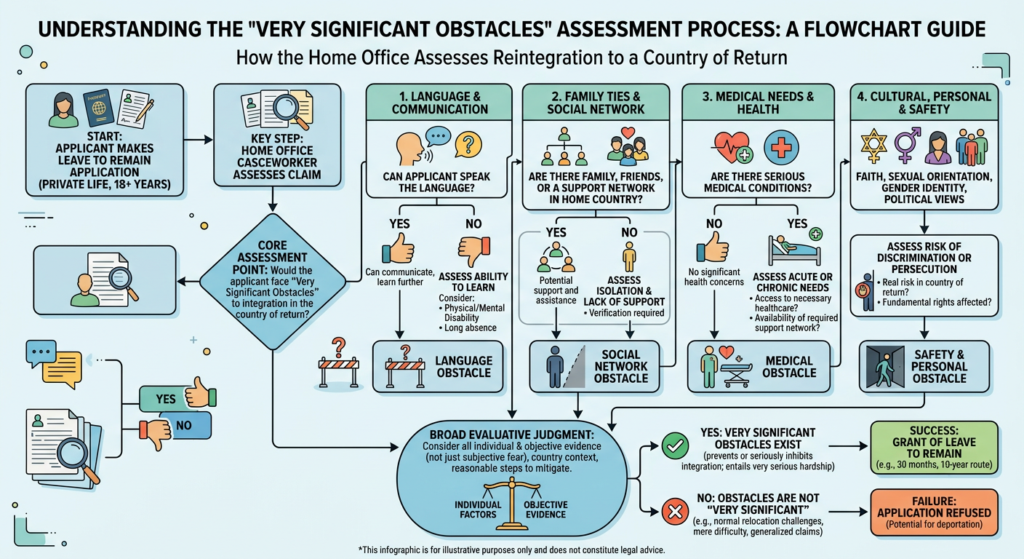
When we talk about “special circumstances,” we are often referring to the “Very Significant Obstacles to Integration” test. This applies to adults who have lived in the UK for less than 20 years but believe they cannot return to their country of origin.
Winning a case based on special circumstances is notoriously difficult because the “very significant obstacles” threshold is high. The Home Office doesn’t just look at whether your life would be harder back home; they look at whether you could function there.
Factors that may constitute special circumstances:
- Lack of Social/Family Ties: If you left your home country as a child and no longer speak the language or have any surviving relatives there.
- Medical Conditions: If you have a severe health condition that requires treatment available in the UK but non-existent or inaccessible in your home country.
- Safety and Discrimination: While this often overlaps with asylum claims, being an outcast due to your lifestyle or beliefs in a way that prevents integration can be a factor.
- Cultural Shock: For those who have become “Westernised” to the point that returning would result in extreme social isolation.
The Different Pathways Under the Private Life Route
The Private Life route isn’t a “one size fits all” application. Depending on your age and how long you have lived in the UK, the requirements change.
| Category | Requirement | Path to Settlement (ILR) |
|---|---|---|
| Children (under 18) | Lived in the UK for at least 7 years continuously. | 5 years or 10 years |
| Young Adults (18–24) | Lived in the UK for at least half their life. | 5 years or 10 years |
| Adults (20-year rule) | Lived in the UK continuously for at least 20 years. | 10 years |
| Special Circumstances | Lived in the UK for any period but face “very significant obstacles” to integration abroad. | 10 years |
The 7-Year Rule for Children
One of the most compassionate aspects of the Private Life route involves children. If a child has lived in the UK for seven years, the focus shifts to whether it would be “unreasonable” to expect them to leave. At Judge Law, we frequently assist families in these positions, ensuring the best interests of the child are at the forefront of the application.
The Importance of “Suitability” in 2026
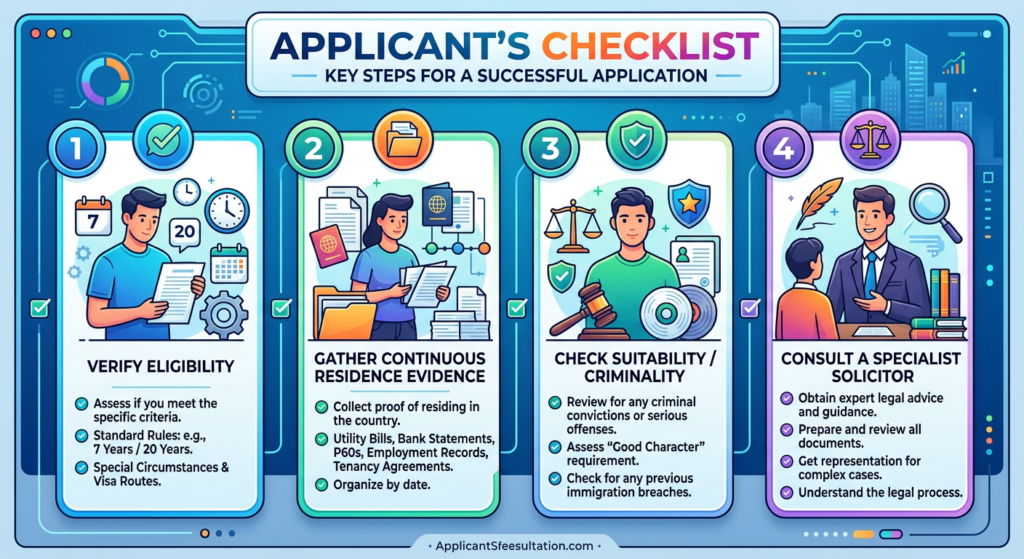
As we navigate 2026, the Home Office has placed an even greater emphasis on Suitability Requirements. Even if you have lived in the UK for 20 years, your application can be refused if you do not meet the character requirements.
This includes:
- Criminal Convictions: Even non-custodial sentences or a history of “persistent offending” can lead to a refusal.
- False Representations: If you have previously lied to the Home Office or used a fake identity, this will be heavily scrutinised.
- Debt to the NHS: Unpaid medical bills can sometimes trigger a suitability refusal.
Because these rules are nuanced, seeking advice from immigration solicitors is essential. A simple mistake in your history or a poorly explained past incident can result in a devastating rejection.
Why Evidence is Your Best Friend
A Private Life application is only as strong as the evidence supporting it. Since you are trying to prove your “life” in the UK, you need to provide a paper trail that covers the entire period you are claiming.
What we recommend collecting:
- Educational Records: School reports, university certificates, or evening class enrolments.
- Financial History: Bank statements, P60s, or even records of utility bills (even if they were in someone else’s name, showing you lived there).
- Medical Records: Letters from your GP or hospital records showing ongoing care.
- Social Integration: Letters from community leaders, charities you volunteer with, or long-term friends who can testify to your life in the UK.
The Path to Settlement (Indefinite Leave to Remain)
The goal for most people on the Private Life route is Indefinite Leave to Remain (ILR). Usually, this is a 10-year journey. You apply for a visa (usually granted for 30 months), and you must renew it consistently until you hit the 10-year mark.
However, for some: particularly those who arrived as children or young adults: there is a faster 5-year route to settlement. Navigating which path you fall onto requires a detailed look at your specific entry date and age at the time of application.
How Judge Law Can Help
Navigating Article 8 and Private Life claims is not just about filling out forms; it’s about telling your story in a way that the Home Office cannot ignore. The law is complex, and the stakes couldn’t be higher.
Our team at Judge Law prides itself on being more than just legal advisors. We are your advocates. Whether you are dealing with a complex 20-year rule case or need to prove that returning to your home country would be impossible, our immigration solicitors London provide the reassuring, expert guidance you need.
We also understand that immigration issues often touch on other areas of life. If your status affects your ability to work, we can assist through our employment law services, or if you are looking to secure a home once your status is granted, our property law team is here to help.
Final Thoughts: Don’t Wait Until It’s Too Late
The biggest mistake many people make is waiting until they are facing removal proceedings before exploring the Private Life route. If you have been in the UK for a long time, or if your circumstances have changed such that you can no longer return home, the time to act is now.
The 2026 rules are firm, but they are not impassable. With the right evidence, a clear legal strategy, and a team that genuinely cares about your future, you can secure your right to stay in the place you call home.
Ready to discuss your future?
Contact Judge Law today for a confidential consultation. Let’s work together to make your stay in the UK permanent.