Buying a home is probably the biggest financial commitment you’ll ever make. It’s an emotional rollercoaster, one minute you’re picking out paint colours for the spare room, and the next you’re worrying about survey results. While it’s easy to fall in love with a south-facing garden or a designer kitchen, it’s vital to keep your head screwed on.
At Judge Law, we see hundreds of property transactions every year. Most go smoothly, but occasionally, a “dream home” turns out to be a nightmare in disguise. Knowing when to walk away isn’t just about saving money; it’s about saving your sanity.
Key Takeaways: Property Red Flags at a Glance
- Structural issues like foundation cracks or systemic damp are often “run away” signs.
- Legal “DIY” (unpermitted extensions or conversions) can lead to massive fines or insurance voids.
- Environmental hazards like Japanese Knotweed or flood risks shouldn’t be ignored.
- The “Neighbourhood Vibe” matters, high vacancy rates or excessive “For Sale” signs can signal a declining market.
- Expert help is non-negotiable. A specialist property solicitor or conveyancing team can spot the legal traps you might miss.
The Physical Red Flags: What the House is Telling You
When you’re viewing a house, the seller has usually spent a weekend tidying up and lighting vanilla candles. You need to look past the staging. Some physical issues are just “maintenance,” while others are structural deal-breakers.
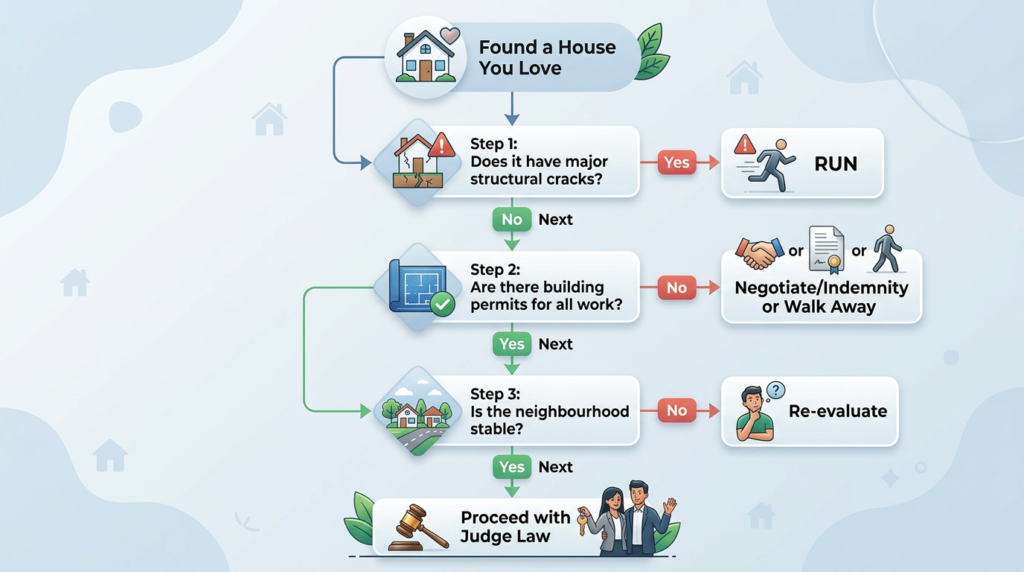
1. Foundation and Structural Cracks
Not every crack is a disaster. Tiny hairline fractures in plaster are common as houses “settle.” However, if you see a horizontal crack, or a vertical crack wider than your pinky nail that runs through the brickwork or foundation, stop. Structural repairs can cost tens of thousands of pounds and can make the property ineligible for standard mortgages.
2. The Smell of Damp and Fresh Paint
If a single room has been freshly painted while the rest of the house looks lived-in, ask yourself why. Often, sellers use a quick coat of “anti-damp” paint to hide water ingress or mould just long enough to get through a viewing. Keep an eye out for bubbling baseboards, a musty odour, or watermark “tide lines” in the basement or on lower walls.
3. DIY Disasters
We all love a bit of home improvement, but major work, like removing load-bearing walls, adding a loft conversion, or rewiring, needs to be done by pros. If the kitchen cabinets are misaligned or the tiling looks like it was done by a toddler, it’s a sign that the previous owner may have cut corners on the stuff you can’t see, like the plumbing or electrics.

Categorising the Risk: Structural vs. Legal
To help you decide whether to negotiate or nominate yourself for a “Get Me Out of Here” exit, use this table:
| Feature | Fixable (Negotiate) | Deal-Breaker (Walk Away) |
|---|---|---|
| Roof | Missing shingles or minor leaks. | Sagging roofline or widespread rot in timbers. |
| Plumbing | Old taps or a leaky toilet. | Lead pipes throughout or a failing main sewer line. |
| Legal | Missing “FENSA” window certificates. | No planning permission for a major extension or loft. |
| Electrical | Outdated fuse box or a few dead outlets. | Evidence of scorched outlets or non-compliant DIY wiring. |
| Structure | Minor “settlement” cracks in plaster. | Cracks wider than 15mm or evidence of subsidence. |
| Pests | Evidence of mice or common spiders. | Active termite infestation or severe woodworm. |
The Legal Red Flags: What the Paperwork is Hiding
This is where your conveyancing solicitors really earn their keep. While a surveyor looks at the bricks, your property transaction expert looks at the rights and obligations tied to those bricks.
1. Unpermitted Renovations
If the seller tells you they “turned the garage into a bedroom last summer,” your first question should be: “Where is the Building Regulations completion certificate?” Without it, you could be forced to tear it down by the local council, or worse, your insurance won’t cover you if something goes wrong.
2. Boundary Disputes
Is that fence actually in the right place? Boundary disputes are some of the nastiest legal battles you can face. If there’s a history of bickering with the neighbour over a driveway or a hedge, it’s a massive red flag. You’re buying a home for peace, not a lifelong feud.
3. Short Leases (For Leasehold Properties)
For flats, the length of the lease is everything. If the lease has less than 80 years left, the cost to extend it jumps significantly (the “marriage value” kicks in). Many lenders won’t even touch a property with a very short lease. As a first time buyer solicitor will tell you, a cheap flat with a 65-year lease is rarely a bargain.
4. Onerous Ground Rents
In the last few years, “doubling ground rents” have become a scandal in the UK. Some leases contain clauses where the ground rent doubles every 10 or 15 years, eventually reaching thousands of pounds a year. This can make the property virtually unsaleable.
Environmental and Neighbourhood Red Flags
Sometimes the house is perfect, but the world around it isn’t.
- Japanese Knotweed: This invasive plant can grow through concrete and destroy foundations. Most lenders won’t provide a mortgage unless there is a professional, multi-year management plan in place.
- High Vacancy Rates: If you see three “For Sale” or “To Let” signs on the same street, ask yourself why everyone is leaving. Is there a new noisy development planned? Has the local school’s rating plummeted?
- Flood Risk: With climate change, flood zones are shifting. If the insurance premium for the house is astronomical, it’s because the house is at risk. Don’t ignore the data.

The Emotional Trap: “But I’ve already spent money!”
One of the biggest reasons people proceed with a bad purchase is Sunk Cost Bias. You’ve already paid for the survey, you’ve paid the residential conveyancing start-up fees, and you’ve spent weeks dreaming about where the sofa will go.
It feels like a waste to walk away now. But losing £2,000 on fees is much better than losing £50,000 on a house that needs a new foundation or has a “sale-proof” legal defect.
How Judge Law Keeps You Safe
When you’re buying or selling property, you need more than just a paper-pusher. You need a partner who can translate “legalese” into plain English and tell you straight when a deal looks “dodgy.”
Our team at Judge Law focuses on being reassuring. We know this is stressful. We dig deep into the local authority searches, the environmental reports, and the contract packs to ensure there are no hidden surprises waiting for you after move-in day.
Whether you are a seasoned investor or need a first time buyer solicitor who will hold your hand through the process, we’ve got the expertise to protect your investment.

Summary: Your Red Flag Checklist
Before you sign that contract, run through this final list:
- Surveyor check: Are there structural cracks or damp?
- Solicitor check: Are all extensions and modifications legal?
- Finance check: Is the lease long enough and the ground rent reasonable?
- Neighbourhood check: Are there hidden nuisances or high crime rates?
- Gut check: If you’re only buying it because you’re tired of looking, walk away.
Let’s Get Your Move Right
Don’t let a red flag turn into a white flag of surrender. If you’re worried about a property you’ve seen, or you’re ready to start your next property transaction with a team you can trust, we’re here to help.
Contact Judge Law today at judgelaw.co.uk to speak with an expert property solicitor. We’ll help you find the way home( safely.)