

TL;DR
- Lease extension costs in the UK include the premium paid to the freeholder and professional legal and surveyor fees, typically ranging from £4,000 to over £80,000 depending on lease length and property value. The premium is mainly calculated through valuation components like ground rent, reversion, and marriage value, with shorter leases demanding higher premiums, especially below 80 years remaining. Upfront budgeting should account for these costs, plus legal and surveyor fees, Land Registry charges, and potentially Stamp Duty, while acting early can significantly reduce total expenses and take advantage of ongoing reforms.
Lease extension cost in the UK is defined as the total sum a leaseholder pays to extend their lease term, comprising the premium payable to the freeholder plus professional legal and surveyor fees. Together, these costs typically range from £4,000 to over £80,000, depending on the remaining lease length, the property value, and the specific terms of the existing lease. The Leasehold and Freehold Reform Act 2024 has introduced significant changes to how premiums are calculated, particularly around marriage value, though full implementation still awaits secondary legislation. If you are weighing whether to extend now or wait, understanding how each cost component works is the most useful place to start.
What determines the lease extension premium in the UK?

The premium is the largest single element of any lease extension cost, and it is calculated using a formal valuation method rather than a simple fixed figure. Three components feed into the calculation. Ground rent capitalisation reflects the present value of the ground rent the freeholder loses when it is reduced to a peppercorn on extension. Reversion value represents the freeholder’s right to reclaim the property at the end of the lease, discounted to today’s money. Marriage value, historically the most contentious element, captured 50% of the uplift in property value created by the extension itself.
The deferment rate is a critical variable in this formula. RICS guidance suggests approximately 5% for houses and 4.75% for flats, though these figures are regularly contested at the First-tier Tribunal. A higher deferment rate reduces the premium; a lower rate increases it. This is precisely why the deferment rate sits at the centre of most negotiation disputes between leaseholders and freeholders.
Remaining lease length drives the premium more than any other single factor. A statutory lease extension adds 90 years to the existing term and reduces ground rent to a peppercorn, which is why the starting position matters so much. The shorter the lease, the higher the premium demanded, and the more complex the valuation becomes.
| Remaining lease length | Typical premium (£400k London flat) |
|---|---|
| 90 years | £2,000 to £5,000 |
| 80 years | £8,000 to £15,000 |
| 75 years | £15,000 to £30,000 |
| 70 years | £25,000 to £50,000 |
| 60 years | £45,000 to £80,000+ |
These figures illustrate how dramatically the premium varies by lease length. Waiting until your lease drops to 70 years can cost you tens of thousands of pounds more than acting at 85 years.
Pro Tip: Instruct a RICS-qualified surveyor before you receive the freeholder’s counter-notice. Their independent valuation gives you a defensible figure to negotiate from, rather than reacting to the freeholder’s opening position.
What additional fees come on top of the premium?
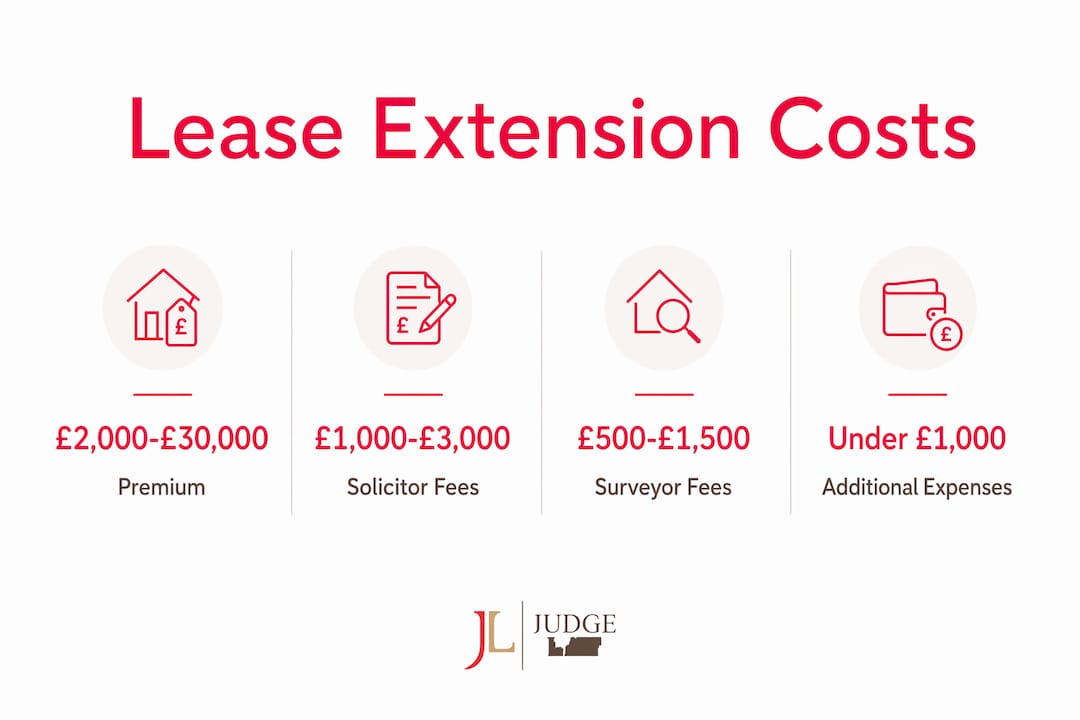
The premium is only part of the picture. Professional fees for lease extension excluding the premium typically range from £4,000 to £8,000 in total, and that figure surprises many leaseholders who budget only for the premium itself.
The main additional costs you should plan for include:
- Your solicitor’s fees. Expect to pay between £1,000 and £3,000 for a solicitor experienced in leasehold law to handle the statutory process, draft the new lease, and manage the legal correspondence.
- Your surveyor’s fees. A RICS-qualified surveyor will charge between £600 and £2,500 to prepare the valuation report and support any negotiation or tribunal proceedings.
- The freeholder’s legal costs. Leaseholders are legally required to pay the freeholder’s reasonable legal and surveyor costs. These typically run to £1,500 to £3,000 combined, and they are non-negotiable in principle, though “reasonable” is a word that can be tested.
- Land Registry fees. Once the new lease is agreed, it must be registered at HM Land Registry. Fees are calculated on a sliding scale based on the property value.
- Stamp Duty Land Tax. SDLT is not usually payable on a lease extension premium, but it can apply in certain circumstances, particularly where ground rent arrangements are involved. Your solicitor should confirm your position.
Understanding solicitor costs in advance helps you budget accurately rather than being caught out at completion. The freeholder’s costs are the element most commonly underestimated, and they are the one you have the least control over.
Pro Tip: Ask your solicitor for a written cost estimate that separates their own fees from the disbursements and the freeholder’s anticipated costs. A clear breakdown at the outset prevents painful surprises later.
How have the 2024 legal reforms changed lease extension costs?
Marriage value was historically the most expensive element of extending a short lease. For any lease with fewer than 80 years remaining, the freeholder was entitled to 50% of the increase in property value created by the extension. On a valuable flat in a sought-after area, that figure could exceed £30,000 on its own.
The Leasehold and Freehold Reform Act 2024 abolishes marriage value. The practical effect, once fully in force, is that leaseholders extending short leases will pay significantly less. The Act also removes the two-year ownership requirement, meaning you no longer need to have owned the property for two years before serving a Section 42 notice to claim your statutory right to extend.
However, the abolition of marriage value awaits secondary legislation before it takes full effect. The 2024 Act received Royal Assent, but the detailed regulations that govern the new valuation methodology have not yet been enacted. This creates a genuinely uncertain position for leaseholders with leases under 80 years.
As of late 2026, these valuation reforms remain uncommenced. A government consultation on the new valuation rates closed in September 2026 with no start date set, and a legal challenge to the abolition of marriage value was dismissed by the High Court in October 2025, so the change is confirmed in principle but not yet in effect.
The key points to understand about the current position are:
- Marriage value abolition is legislated but not yet in force for premium calculations.
- The two-year ownership requirement has been removed, giving new owners earlier access to statutory rights.
- The Act signals a clear direction of travel toward lower premiums for short leases, but the timing of full implementation remains unclear.
- Acting before the secondary legislation is in place means marriage value may still apply to your premium calculation.
Given this uncertainty, the decision of when to extend is genuinely consequential. If your lease is approaching 80 years, waiting for the secondary legislation to take effect could save a substantial sum. If your lease is already well below 80 years, the cost of delay in terms of a rising premium may outweigh the potential saving from reform.
How can you estimate and budget for lease extension costs?
Budgeting accurately for a lease extension requires more than a rough figure from an online calculator. Lease extension calculators, including those provided by RICS and various property platforms, give a useful starting estimate for the premium, but they cannot account for the specific variables in your lease, your freeholder’s approach, or the current state of reform legislation.
A structured approach to budgeting works as follows:
- Obtain an initial premium estimate. Use a reputable lease extension calculator to understand the likely premium range based on your remaining lease length and property value. Treat this as an indicative figure, not a firm quote.
- Instruct a RICS surveyor early. Commission a formal valuation before serving the Section 42 notice. This fixes your negotiating position and provides the evidence base for any tribunal challenge.
- Get written fee estimates from your solicitor. Request a breakdown covering their own fees, disbursements, and an estimate of the freeholder’s costs you will be required to meet.
- Account for Land Registry and any SDLT. Your solicitor should confirm whether SDLT applies to your specific transaction and what the Land Registry fee will be.
- Contact your mortgage lender. If you have a mortgage, your lender must give formal consent to the lease extension. Mortgage lenders require a deed of substituted security before approving the extension, and failure to involve them early can delay completion significantly.
- Build in a contingency. Negotiations can extend the timeline and add costs, particularly if the freeholder disputes the valuation. A contingency of 10 to 15% on top of your estimated total is prudent.
Early preparation before serving the Section 42 notice is consistently recommended by practitioners. Starting the process well before your lease drops below 80 years gives you time to instruct professionals, obtain valuations, and negotiate without the pressure of a deteriorating position.
Pro Tip: Never accept the freeholder’s initial premium demand without obtaining your own independent valuation. Negotiation routinely reduces the premium below the opening figure, and a surveyor’s report is your primary tool for achieving that.
What do typical lease extension costs look like in practice?
Concrete examples make the cost picture clearer than ranges alone. Consider a flat valued at £400,000 with 75 years remaining on the lease. The premium for this scenario typically falls between £15,000 and £30,000. Add professional fees of £4,000 to £8,000, and the total cost of the extension sits somewhere between £19,000 and £38,000.
The contrast with a flat at 90 years remaining is stark. At that lease length, the premium on the same property might be as low as £2,000 to £5,000. Including professional fees, the total cost could be under £13,000. That is a potential saving of £25,000 or more simply by acting earlier.
| Scenario | Remaining years | Estimated premium | Professional fees | Approximate total |
|---|---|---|---|---|
| Early extension | 90 years | £2,000 to £5,000 | £4,000 to £6,000 | £6,000 to £11,000 |
| Mid-term extension | 75 years | £15,000 to £30,000 | £5,000 to £7,000 | £20,000 to £37,000 |
| Short lease extension | 60 years | £45,000 to £80,000+ | £6,000 to £8,000 | £51,000 to £88,000+ |
A worked example from published cost data shows a total cost including premium of approximately £14,358, comprising a premium of £11,250, valuation fees of £354, and solicitor fees of around £900 per party. This represents a relatively straightforward case at a moderate lease length, and it illustrates how quickly the total accumulates even when the premium itself is modest.
Pro Tip: Understanding UK property legal terms such as peppercorn rent, reversion value, and Section 42 notice before you instruct professionals will help you follow the process clearly and ask better questions.
My view on managing lease extension costs well
The single most common mistake I see leaseholders make is treating the premium as the only number that matters. The freeholder’s costs are a legal obligation, not a negotiating point in the way the premium is, and they can be painfully high if the freeholder instructs expensive professionals. Budget for them from day one.
The second mistake is waiting. The 80-year threshold is not a cliff edge you can see coming from a distance. Leases tick down quietly, and by the time a leaseholder realises their lease is approaching 75 years, the premium has already risen considerably. The Leasehold and Freehold Reform Act 2024 may eventually reduce costs for short leases, but secondary legislation has not yet arrived, and there is no guarantee of timing. Waiting for reform to crystallise while your lease shortens is a gamble that rarely pays off.
Professional surveyor involvement is not optional if you want to negotiate effectively. The deferment rate and marriage value are the two levers most commonly used to challenge a freeholder’s valuation, and both require expert analysis to deploy properly. A surveyor who specialises in lease extensions will often recover their fee many times over through premium reduction. That is not a theoretical benefit. It is a consistent pattern in contested cases.
FAQ
How much does a lease extension cost in the UK?
The total lease extension cost in the UK typically ranges from around £6,000 for a lease with 90 years remaining to over £88,000 for a lease with 60 years or fewer, combining the premium and professional fees. The exact figure depends on the property value, remaining lease length, and the freeholder’s costs.
What is the premium in a lease extension?
The premium is the sum paid to the freeholder to grant the extended lease, calculated using ground rent capitalisation, reversion value, and, where applicable, marriage value. For a £400,000 flat, premiums range from roughly £2,000 at 90 years remaining to £80,000 or more at 60 years.
Does the Leasehold and Freehold Reform Act 2024 reduce costs?
The 2024 Act abolishes marriage value, which could save leaseholders with short leases over £30,000, but this provision awaits secondary legislation before it applies to premium calculations. Until the secondary legislation is enacted, marriage value may still be payable on leases under 80 years.
Do I have to pay the freeholder’s legal costs?
Yes. Leaseholders are legally required to pay the freeholder’s reasonable legal and surveyor costs as part of the statutory process. These freeholder costs typically range from £1,500 to £3,000 and cannot be avoided, though “reasonable” can be challenged if the freeholder’s fees appear disproportionate.
When is the best time to extend a lease?
The best time to extend is before the lease drops below 80 years, as marriage value currently applies below that threshold and significantly increases the premium. Early preparation before serving the Section 42 notice also gives you time to instruct professionals and negotiate without pressure.