
Gazumping happens when a seller accepts a higher offer from a new buyer after already agreeing a price with you, and it remains entirely legal in England and Wales because no sale is binding until contracts are exchanged. Scotland works differently. Once an offer is accepted and missives are concluded there, the agreement is binding far earlier in the process, which makes gazumping rare north of the border. Northern Ireland follows the same principle as England and Wales, so buyers there face the same exposure.
Gazumping is not a freak event confined to a handful of unlucky buyers, but it is not the default outcome of buying a home either. Your risk rises and falls with market conditions, and understanding what drives it is the first step to managing it.
TL;DR
- Gazumping is legal in England, Wales and Northern Ireland because no sale is binding until contracts are exchanged.
- In Scotland the agreement becomes binding once missives are concluded, so gazumping is rare there.
- The risk is highest between offer acceptance and exchange, especially around the survey and mortgage valuation stage.
- A mortgage agreement in principle, a solicitor instructed early and asking for the property to be taken off the market all reduce the risk.
- Winning at auction creates a binding contract at the fall of the hammer, which removes gazumping risk.
What is gazumping in the UK, and how does it happen?
Conveyancing
Get an instant conveyancing quote
See your fixed-fee legal costs and Stamp Duty on screen in about a minute, with the full breakdown emailed to you. No obligation.
Gazumping describes a specific sequence. You make an offer on a property, the seller accepts it verbally or in writing “subject to contract,” and you begin instructing a solicitor, arranging surveys and searches. Then, before contracts are exchanged, the seller accepts a higher offer from someone else and pulls out of the agreement with you. You have no legal claim to the property, no matter how much time or money you have already committed.
Picture a fairly ordinary case. A buyer offers £320,000 on a three-bedroom house in June, the seller accepts, and the buyer instructs a conveyancer, pays for a survey, and starts the mortgage valuation process. Six weeks later, with exchange still a fortnight away, a second buyer offers £335,000. The seller, under no legal obligation to the first buyer, accepts the higher figure. The original buyer loses the survey fee, some solicitor’s costs, and weeks of time, with nothing to show for it.
Two related terms are worth knowing, because they come up constantly in the same conversations:
- Gazundering is the mirror image, where a buyer lowers their offer shortly before exchange, often when they sense the seller cannot easily pull out. It tends to surface in falling or uncertain markets, whereas gazumping is more common when prices are rising and competition is fierce.
- Sold subject to contract (SSTC) is the status shown on property listings once an offer is accepted. It signals an agreement in principle, not a binding sale, which is precisely why the property can still be shown to other buyers.
Several warning signs suggest a transaction is more vulnerable than most. Watch for these:
- The agent keeps the listing live or continues to arrange viewings after your offer is accepted.
- The seller is unusually slow to instruct their own solicitor or provide the title information pack.
- You are in a strong seller’s market with multiple bidders known to have viewed the property.
- The seller has hinted at needing a fast sale or has an onward purchase riding on yours.
- There is a long gap between offer acceptance and a mortgage valuation being booked.
None of these guarantees you will be gazumped. Together, they describe the conditions where it tends to occur.
Is gazumping legal in the UK?
Gazumping is legal in England, Wales, and Northern Ireland, and no impending change alters that today. The reason is structural rather than a loophole. English and Welsh conveyancing law deliberately delays legal commitment until exchange of contracts, giving both sides a window to complete searches, surveys, and mortgage arrangements before either party is locked in. That same window is what allows a seller to walk away and accept a better offer.
Scotland is genuinely different, and it is worth understanding why rather than just noting the contrast. Once an offer is accepted and missives, the formal exchange of letters between solicitors confirming the terms, are concluded, both parties are bound. There is no equivalent gap for a seller to entertain a rival bid after that point. Gazumping still occurs occasionally before missives are concluded, but the exposure window is dramatically shorter than in England and Wales.
The table below sets out how the risk period actually plays out in a typical English or Welsh purchase.
| Stage | Typical timeframe | Legal status | Gazumping risk |
|---|---|---|---|
| Offer accepted (SSTC) | 0 | Not binding on either party | Risk begins |
| Solicitor instructed, searches ordered | Week 1 to 2 | Not binding | Rising |
| Survey and mortgage valuation | Week 2 to 6 | Not binding | Highest |
| Enquiries raised and answered | Week 4 to 10 | Not binding | Elevated |
| Contracts exchanged | Week 8 and beyond (varies widely) | Legally binding | Risk ends |
| Completion | Set at exchange, often 1 to 4 weeks later | Binding, ownership transfers | None |
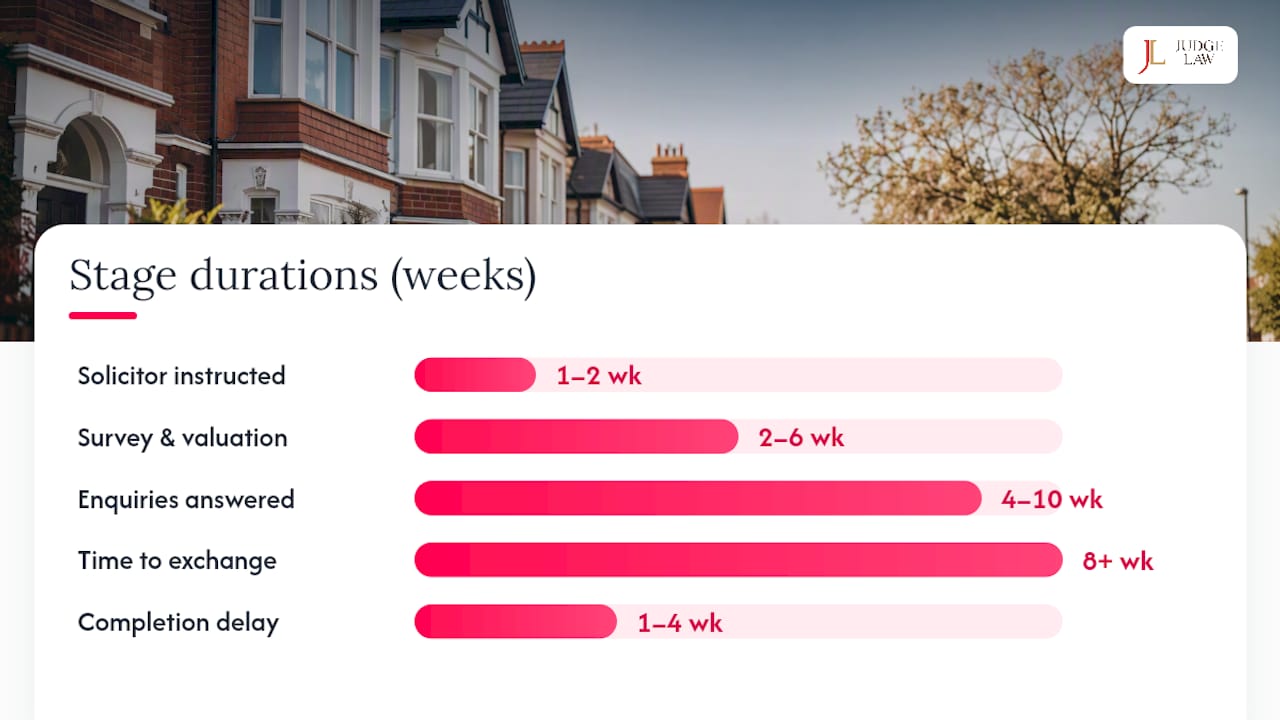
The timeframes vary considerably depending on chain length, local authority search delays, and how quickly each side responds to enquiries. A detailed breakdown of why these stages sometimes stretch far longer than buyers expect is worth reading if you want to understand why house sales take so long.
The practical consequences differ sharply by jurisdiction:
- In England and Wales, either party can withdraw at any point before exchange without financial penalty, save for wasted costs already incurred.
- In Northern Ireland, the same principle applies, and gazumping carries the same legal exposure as in England and Wales.
- In Scotland, once missives are concluded, withdrawal by either party is a breach of contract, which is why gazumping is rare there and largely confined to the pre missives period.
When and why does gazumping happen?
Gazumping clusters around specific market conditions, and recognising them at the point of offer tells you far more about your real exposure than any generic checklist. Rising prices and tight housing supply are the biggest drivers. When demand outstrips available stock, sellers know a rejected higher offer today might not reappear tomorrow, which weakens their incentive to honour an earlier agreement.
Several behavioural signals tend to precede a gazumping attempt:
- The estate agent continues booking viewings weeks after your offer was accepted, rather than marking the property as under offer.
- The seller becomes noticeably slower to respond to solicitor correspondence, often because they are weighing a better offer elsewhere.
- A chain above or below yours introduces delay, giving a rival buyer time to make an approach.
- The seller has not yet found their own onward property, so they have less urgency to complete with you specifically.
Pro Tip: Sellers gazump for one of two reasons, either greed or fear that a chain will collapse. A cash buyer with no chain, a mortgage agreement in principle already in place, and a solicitor instructed on day one removes both incentives at once, because you represent the safest, fastest route to completion regardless of who offers more.
How can you reduce the risk of being gazumped?
The most effective measures are a mortgage agreement in principle secured before you even view properties, a solicitor instructed and ready to act the day your offer is accepted, and a direct request to the seller to take the property off the market, and Which? identifies all three as the standard first line of defence. None of these guarantees protection, because nothing short of exchange does, but together they close much of the gap that makes gazumping possible.

Work through the process in three phases.
Before you offer:
- Get a mortgage agreement in principle from your lender so you can move the moment an offer is accepted.
- Research and instruct a conveyancing solicitor in advance, rather than waiting until after your offer is accepted.
- Arrange your deposit funds so they are accessible without delay.
When you make your offer:
- State clearly that you expect the property to be marked as sold subject to contract and removed from the market.
- Confirm your position, whether chain free, a first time buyer, or already sold subject to contract on your own property, since sellers weigh this heavily.
- Ask the estate agent directly what their internal policy is on continuing to accept viewings after an offer is accepted, since some agents operate policies designed to reduce gazumping once you request it.
After acceptance:
- Instruct your solicitor the same week and return the client care documents and identification promptly.
- Book your survey and mortgage valuation immediately rather than waiting for searches to come back.
- Chase your solicitor for weekly updates and push for the draft contract to be issued as early as possible.
Sellers instinctively favour buyers who look like the least risk to their own timeline. A property purchase checklist that shows you have already lined up searches, surveys, and funding does more to reassure a nervous seller than any verbal promise.
Pro Tip: If you are chain free or a cash buyer, say so explicitly and repeatedly, in your offer letter, to the agent, and to the seller’s solicitor. Sellers under time pressure will often accept a slightly lower offer from a buyer who can complete in six weeks over a higher offer from someone three links deep in a chain.
Do exclusivity agreements actually stop gazumping?
Exclusivity agreements, sometimes called lock out agreements, can prevent a seller from accepting another offer during a fixed period, but they are contractual promises rather than a block on the sale itself, and they are far from standard practice. These agreements remain uncommon in residential transactions, largely because most sellers and agents see little reason to grant one unless the buyer specifically asks and offers something in return.
A typical exclusivity agreement runs for two to four weeks, is drafted by solicitors on both sides, and often requires the buyer to pay a small non refundable fee, sometimes a few hundred pounds, as consideration for the seller’s commitment. The agreement creates an enforceable obligation if the seller breaches it during the agreed window, provided the period is clearly specified; an open-ended promise to negotiate only with you is unlikely to be enforceable.
The limitations are real and worth weighing honestly:
- The agreement only covers the agreed period, so if exchange slips beyond it, you are exposed again unless you renegotiate.
- Sellers can simply refuse to sign one, and many do, particularly in a strong seller’s market where they have no reason to limit their options.
- Breach typically entitles you to recover wasted costs, not to force the seller to complete the sale, so it will not get you the house.
- Negotiating and drafting the agreement itself adds time and legal cost at the start of the process.
Pro Tip: Exclusivity agreements are most likely to be accepted when the seller is equally keen to avoid delay, for example if they have already found their onward property. Solicitors typically structure them as a short, standalone contract signed alongside the offer letter, rather than as part of the main sale documentation, precisely so it can be enforced independently if things go wrong.
What does home buyers protection insurance cover if you’re gazumped?
Specialist home buyers protection insurance can reimburse survey fees, legal disbursements, and mortgage valuation costs if your purchase collapses, but it will not cover the property itself or force the sale to proceed. It is worth considering once a survey and legal work are underway, since those are the costs most exposed if a seller pulls out.
Typical losses when a sale falls through can include:
- Survey and valuation fees, often several hundred pounds depending on the type of survey commissioned.
- Solicitor’s fees for work already carried out, sometimes running into a few hundred pounds even before exchange.
- Mortgage arrangement or application fees, which are not always refundable depending on the lender.
- Time and opportunity cost, which no policy will reimburse but which buyers consistently underestimate.
Wasted fees can add up to a significant sum once survey, legal, and mortgage costs are combined, particularly on higher value properties where survey fees scale up. Policies vary considerably in scope, so checking exclusions and claim limits before relying on cover matters rather than assuming a standard policy will pay out for every scenario. Most exclude claims arising from your own change of mind or a failed mortgage application, and cover only kicks in once the seller withdraws.
Pro Tip: Insurance makes the most economic sense on higher value purchases where survey and legal costs are proportionately larger, or in markets where you already sense competitive pressure. On a modest terraced house with a basic survey, the premium may not justify the limited payout on offer.
Can buying at auction avoid gazumping entirely?
Winning a bid at auction creates an immediately binding contract at the fall of the hammer, which removes the conventional gazumping risk altogether. There is no pre exchange window for a seller to accept a better offer, because the successful bid is the exchange. Completion typically follows within 20 to 28 days, and by that point withdrawal by either side is a breach of contract with financial consequences.
That certainty comes at a cost, and it is worth setting the trade offs against a standard private treaty purchase before deciding.
| Factor | Auction purchase | Private treaty purchase |
|---|---|---|
| When contract becomes binding | Immediately, at the fall of the hammer | At exchange of contracts, weeks after offer |
| Gazumping risk | None once the bid is accepted | Present until exchange |
| Pre purchase due diligence | Must be completed before bidding | Can continue after offer acceptance |
| Deposit required | Usually 10% on the day, paid immediately | Typically at exchange, later in the process |
| Ability to negotiate after acceptance | None, price is fixed at the hammer | Some room for renegotiation before exchange |
| Funding flexibility | Requires funds arranged in advance | More time to finalise mortgage offer |
Before bidding, complete the same due diligence you would normally do after an offer is accepted elsewhere:
- Instruct a solicitor to review the legal pack, including title, searches, and any special conditions, before auction day.
- Arrange a survey on the property in advance, since you cannot pull out afterwards if defects emerge.
- Confirm your mortgage offer or have cash funds ready, since completion timelines are unforgiving.
- Check the guide price against comparable sales, since auction prices can move quickly once bidding starts.
Pro Tip: Funds need to be genuinely ready, not just agreed in principle. Most auction houses require the 10% deposit on the day and full completion within a month, so a mortgage offer still working through underwriting at auction time is a real risk, not a formality.
What reforms are being proposed to end gazumping?
The government consulted on reforming home buying and selling from October to December 2025 and published a reform roadmap on 19 June 2026. It says it will legislate to require binding conditional contracts, which would make it harder for either side to pull out before exchange, but only once upfront sales packs are embedded. None of this is law yet.
The developments so far, in sequence:
- The consultations ran from 6 October to 29 December 2025 and covered the whole home buying and selling system, including upfront property information and binding contracts.
- The roadmap says binding conditional contracts will be required after sales packs are embedded, with room for legitimate reasons to withdraw, such as a collapsed chain, and penalties to be worked out with industry.
- No commencement date has been set. The roadmap places binding contracts in its longer-term phase, by the end of this Parliament, with legislation when parliamentary time allows. In 2026 the government is promoting the voluntary use of reservation agreements.
- Buyers currently in the market should assume the existing exchange based system remains in force for the foreseeable future.
Pro Tip: Do not delay taking practical precautions on the assumption that reform will arrive in time to protect your own purchase. Whatever timeline eventually emerges, it will not apply retrospectively to a transaction already underway, so the steps outlined earlier in this guide remain your only real protection today.
What should you do if you’ve been gazumped?
Verify the details of the rival offer and check your own position in any chain before deciding how to respond, since acting on rumour rather than fact wastes time you may not have. Ask the estate agent directly whether the seller has formally accepted the new offer or is simply using it as leverage to test your resolve, because the two situations call for different responses.
Work through the decision in order:
- Confirm the facts. Ask the agent whether the seller has actually accepted a new offer or is still weighing it, since some “gazumping” threats are negotiating tactics rather than a done deal.
- Decide whether to match or beat the offer. Weigh the new figure against your own ceiling and the property’s genuine value, not just the desire to win.
- Consider negotiating on speed instead of price. If you can complete faster than the rival buyer, particularly if you are chain free, that certainty sometimes outweighs a few thousand pounds for a seller who wants a quick sale.
- Check for an exclusivity agreement. If one was in place and the seller has breached it within the agreed period, you may have a claim for wasted costs, and this is the point to return to your solicitor immediately.
- Notify your insurer if you hold home buyers protection cover. Claims typically require evidence the sale has genuinely collapsed, so gather correspondence from the agent and your solicitor confirming withdrawal.
- Decide whether to walk away. If the seller has shown themselves willing to renege once, weigh whether continuing the relationship is worth the risk of it happening again closer to exchange.
If you do decide to continue with the same solicitor on a new purchase, guidance on essential conveyancing tips for buyers and sellers sets out how to keep the next transaction moving faster from the outset.
The Judge Law view on managing gazumping risk
Solicitors make the biggest difference to gazumping risk in the first 48 hours after an offer is accepted, not at exchange itself. By the time contracts are drawn up, most of the vulnerability has already passed or hardened into a problem. What actually protects a buyer is how quickly the conveyancing file gets opened, how fast identification and client care paperwork is returned, and whether searches go out in week one rather than week three.
In practice, that means structuring conveyancing workflows so a new instruction does not sit in a queue. Getting local authority searches ordered immediately, chasing the seller’s solicitor for the draft contract and title pack before being asked, and flagging enquiries the moment they arise rather than batching them, all shave real weeks off the pre exchange window. That window is where gazumping lives, so shrinking it is the single most concrete thing a solicitor controls.
Judge Law is regulated by the Solicitors Regulation Authority under registration number 634380, and every piece of advice we give on timing, fees, and process is set out in plain English from the outset. Clients should know exactly what a transaction will cost and roughly how long each stage should take, not discover it piecemeal as delays accumulate.
This article is general information, not a substitute for advice from a qualified lawyer. Consult a qualified legal professional about your own circumstances before acting on anything here.
Sources
- What is gazumping? The complete guide
- What is gazumping and is it illegal? – Which?
- What is gazumping and how can I avoid it – Zoopla
- What is Gazumping Complete UK Guide to Avoiding It 2025 Homemove
FAQ
Is gazumping still allowed in the UK?
Yes, gazumping remains legal in England, Wales, and Northern Ireland because no sale becomes binding until contracts are exchanged. Scotland’s system of concluded missives makes it far less common there, since the agreement binds both parties much earlier.
Is gazumping going to be illegal?
Not immediately. The government’s home buying and selling reform roadmap, published in June 2026, says it will legislate to require binding conditional contracts once upfront sales packs are embedded, but no commencement date has been set, so the current exchange based system still applies to transactions underway now.
Do estate agents like gazumping?
Estate agents are legally required to pass on offers to the seller promptly and in writing, whatever their personal view, unless the seller has said in writing that they do not want offers of a particular kind, though some agents operate internal policies to discourage further viewings once an offer is accepted. It is worth asking your agent directly what their policy is at the start of negotiations.
Should I accept a gazumping offer?
If you are the seller, accepting a higher offer is legal but weigh the financial gain against the delay and risk of losing your existing buyer’s readiness to proceed. If you are the buyer facing a rival offer, matching it only makes sense if the new price still reflects fair value for the property, rather than paying simply to win.