
TL;DR
- Conveyancing costs in 2026 vary between £1,000 and over £2,500, depending on property type and location. Additional expenses arise from disbursements, regional search fees, and specific transaction complexities like leasehold extensions or new builds. Transparency through detailed quotes is essential to avoid unexpected charges and ensure a smooth property transfer process.
Conveyancing costs are defined as the total legal expenses involved in transferring property ownership, comprising solicitor or licensed conveyancer fees plus third-party disbursements. For 2026, typical UK conveyancing fees range from roughly £1,000 to £2,500 depending on whether you are buying, selling, or doing both simultaneously, and whether the property is freehold or leasehold. That range is wider than most buyers expect, and the gap between a straightforward freehold purchase and a leasehold transaction with simultaneous sale can be painfully significant. Understanding what drives those figures before you instruct a solicitor is the clearest way to avoid a nasty surprise on your completion statement.
What makes up conveyancing costs in the UK?
Conveyancing
Get an instant conveyancing quote
See your fixed-fee legal costs and Stamp Duty on screen in about a minute, with the full breakdown emailed to you. No obligation.
Conveyancing costs divide into two distinct categories. The first is the solicitor’s or licensed conveyancer’s legal fee, which covers the professional work of reviewing contracts, raising enquiries, managing exchange and completion, and handling funds. The second category is disbursements, which are third-party costs your solicitor pays on your behalf and passes through to you.
Common disbursements include the following:
- Local authority search fees. These reveal planning history, road adoption status, and enforcement notices. Fees vary considerably by council.
- Environmental and drainage searches. Usually bundled into a search pack alongside the local authority search, with the total pack typically running £250 to £500.
- HM Land Registry registration fees. HMLR fees are itemised separately on your completion statement and vary by fee band based on the property’s purchase price.
- Stamp Duty Land Tax (SDLT). This is a government tax on property purchases above certain thresholds, not a solicitor charge, though your solicitor handles the filing.
- Bankruptcy and Land Registry searches. Relatively modest charges, usually under £10 each, but present on most completion statements.
- Bank transfer fees. Most firms charge £20 to £40 for telegraphic transfers on completion day.
VAT at 20% applies to the solicitor’s legal fee and to some disbursements. Always confirm whether the quote you receive is inclusive or exclusive of VAT, as the difference can add several hundred pounds to your total.
How does property type and tenure affect conveyancing fees?
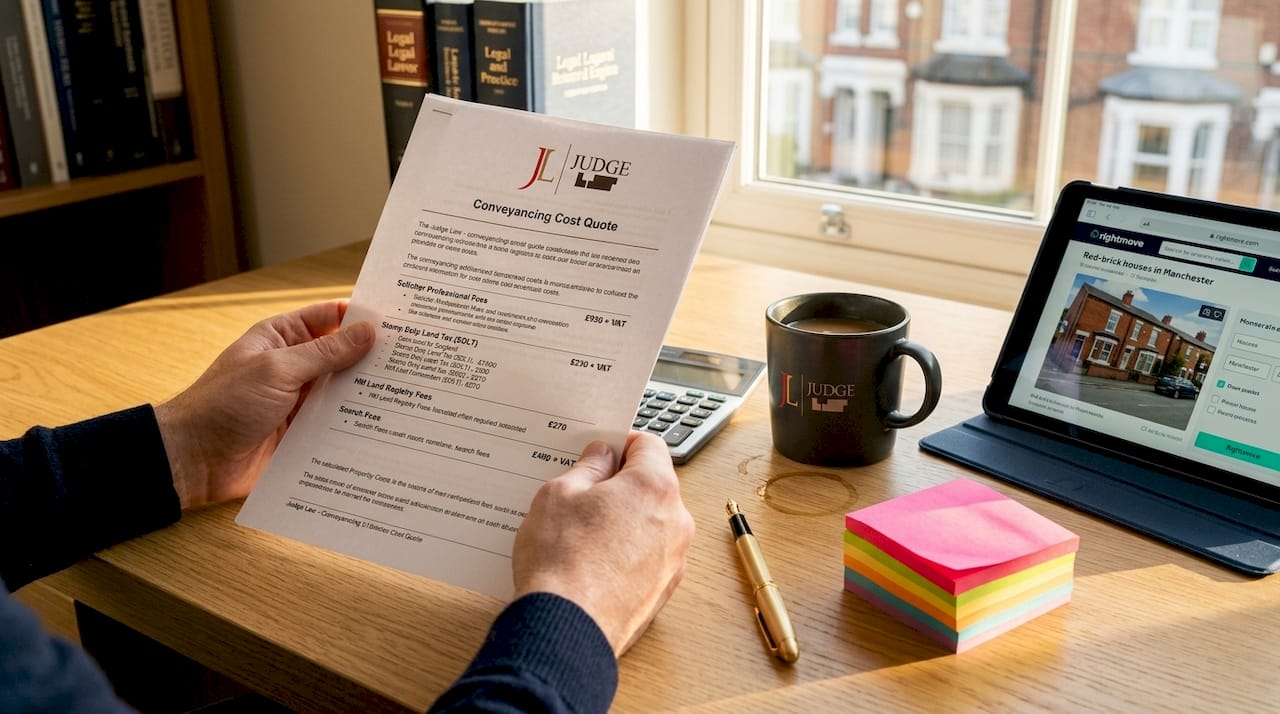
The single biggest variable in conveyancing fees, after the transaction type itself, is tenure. Freehold and leasehold properties require materially different amounts of legal work, and that difference is reflected directly in the fee.
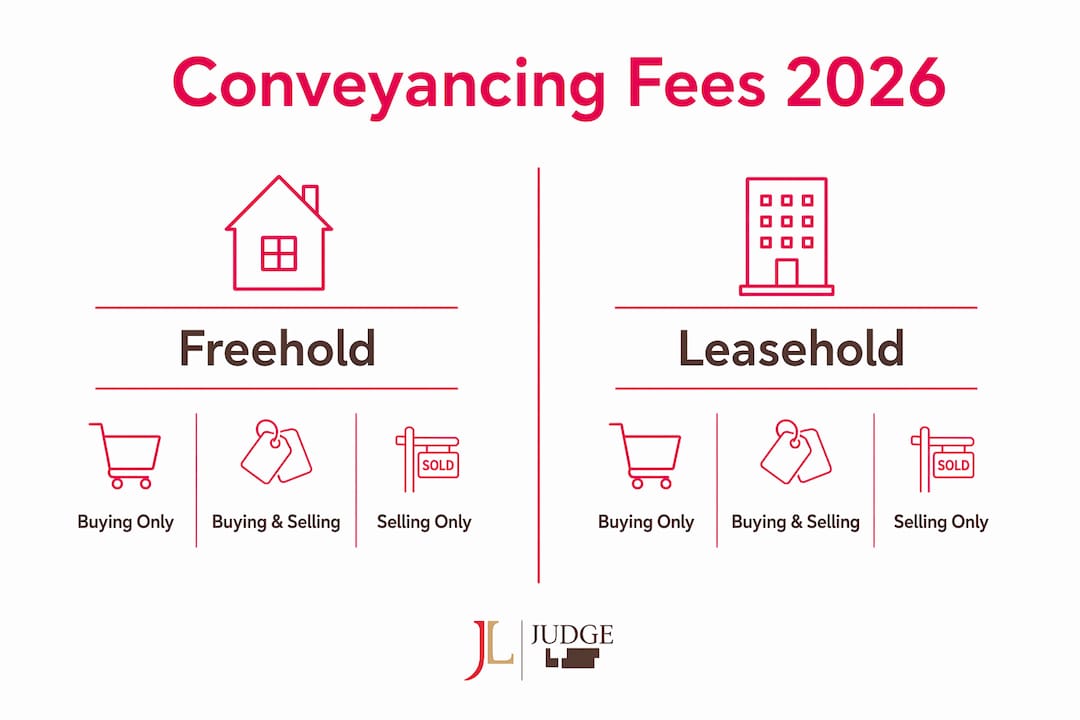
Buying a freehold property averages around £1,518 in legal fees in 2026, while buying leasehold averages £1,844. That gap exists because leasehold transactions require your solicitor to review the lease itself (which can run to hundreds of pages), examine service charge accounts, check ground rent provisions, and procure a management pack from the freeholder or managing agent. Leasehold conveyancing adds £300 to £500 to legal fees as a direct result of this additional work, and the management pack alone typically costs £200 to £350.
The table below sets out average fee ranges by transaction type and tenure for 2026.
| Transaction type | Tenure | Average legal fees (2026) |
|---|---|---|
| Buying only | Freehold | £1,298 to £1,738 |
| Buying only | Leasehold | £1,600 to £2,100 |
| Selling only | Freehold | £1,000 to £1,500 |
| Selling only | Leasehold | £1,200 to £1,800 |
| Buying and selling | Freehold | £2,334 or more |
| Buying and selling | Leasehold | £2,800 or more |
Buying and selling simultaneously effectively doubles the legal workload because each side of the transaction is treated as a separate matter. Some firms offer a modest discount for handling both, but significant savings are uncommon. Budget for combined fees of at least £2,334 if you are in a chain.
Pro Tip: If you are buying a leasehold property, ask your solicitor at the outset whether the lease has fewer than 80 years remaining. A short lease triggers a statutory lease extension process under the Leasehold Reform, Housing and Urban Development Act 1993, which adds further legal costs and time to your transaction. You can read more about the legal steps in buying a home to understand where this fits in the process.
Does location affect how much conveyancing costs in 2026?
Location affects conveyancing costs in two ways. Solicitor pricing varies by region, with London firms typically charging more than those in the Midlands or the North. More significantly, local authority search fees vary to a degree that most buyers do not anticipate.
A 2026 survey of 14 English councils found local authority search fees ranging from £74.50 in Manchester to £312.05 in Croydon for the same product. That is a fourfold difference for identical information. The variation arises from differing cost-recovery models adopted by individual councils, and from whether a council has migrated parts of its search process to HM Land Registry digital services. In high-cost authorities such as Croydon and Surrey Heath, the council search element alone can exceed £500 once related drainage and environmental searches are included.
The table below illustrates how regional search costs can affect your total disbursement bill.
| Council area | Local authority search fee (approx. 2026) | Impact on total search pack |
|---|---|---|
| Manchester | £74.50 | Lower end of range |
| Birmingham | £130 to £160 | Mid-range |
| Surrey Heath | £280 to £320 | High end |
| Croydon | £312.05 | Highest surveyed |
This regional variation means a conveyancing quote generated for a property in Manchester will look materially different from one for a property in Croydon, even if the solicitor’s legal fee is identical. When comparing quotes, always check the disbursement schedule line by line rather than comparing headline totals.
Pro Tip: Ask any conveyancer you are considering for a full disbursement breakdown specific to the property’s postcode, not a generic estimate. The difference between a low-cost and high-cost search area can add £200 to £400 to your bill before the solicitor charges a penny.
What additional charges should you watch for in a conveyancing quote?
A conveyancing quote is not always a fixed price. Several circumstances trigger supplementary charges that may not appear in the initial estimate, and failing to check for these is one of the most common sources of frustration for buyers and sellers.
Common additional charges include the following:
- Gifted deposit check. If part of your deposit is a gift from a family member, your solicitor must verify the source of funds. This typically adds £50 to £100 to your bill.
- New build supplement. New build transactions involve additional legal complexity, including reviewing developer contracts and managing tight exchange deadlines. The average supplement is around £522 for new build properties.
- Lease extension. If you are extending a lease as part of or alongside your purchase, expect an additional charge averaging around £1,050.
- Transfer of equity. Adding or removing a name from a title, for example on remortgage or following a relationship breakdown, typically adds around £268.
- Management pack fee. For leasehold properties, the freeholder or managing agent charges for providing the pack of service charge and insurance information. Budget £200 to £350.
- Indemnity insurance. Where a title defect or missing document is resolved by indemnity insurance rather than rectification, the premium is an additional cost. Amounts vary widely depending on the risk being insured.
The clearest protection against unexpected charges is to read the client care letter and fee schedule before you instruct. A reputable firm will itemise every potential additional charge upfront. If a quote contains only a single headline figure with no disbursement breakdown, treat that as a warning sign rather than a bargain.
How to get a transparent conveyancing quote and choose the right provider
Choosing a conveyancer on price alone is a decision many buyers regret. The cheapest quote rarely reflects the full cost, and poor communication during a transaction can cost you far more in stress, delays, and abortive costs than you saved on the fee.
Follow these steps when obtaining and evaluating a conveyancing quote in 2026.
- Request a full itemised quote. Ask for the legal fee, all disbursements, VAT treatment, and any potential additional charges listed separately. A quote that bundles everything into one figure is not transparent.
- Confirm what is included in the legal fee. Some firms charge separately for ID verification, file storage, or electronic document handling. These should be disclosed upfront.
- Ask about payment timing. Search fees are typically paid upfront and are non-refundable if the transaction falls through. No-sale-no-fee policies protect only the legal fee, not disbursements, so you may still lose several hundred pounds if a purchase collapses.
- Check the firm’s communication standards. Ask how they will update you and how quickly they respond to queries. Advisers and consumers now treat the mortgage and legal conveyancing process as a single journey, and delays in communication from a solicitor can hold up a mortgage offer or a chain.
- Compare at least three quotes. Use the itemised breakdown, not the headline total, as your basis for comparison.
Pro Tip: If you are buying a new build, instruct a solicitor with specific new build experience. Developer contracts contain conditions and deadlines that differ significantly from standard residential transactions. Judge Law’s guide to buying a new build property sets out what to expect.
Why transparency in conveyancing fees matters more than ever
I have seen the same pattern repeat itself across residential transactions. A buyer receives a low headline quote, instructs on that basis, and then receives a completion statement that bears little resemblance to what they budgeted. The frustration is not just financial. It is the sense of having been misled at a moment when trust matters most.
The 2026 market has sharpened this issue. Consumers now expect the mortgage and legal process to function as a single, coherent experience, and the firms that deliver on that expectation are the ones generating referrals and repeat instructions. The complexity added by leasehold tenure and regional search fee variation means that generic quotes are genuinely inadequate. A buyer purchasing a leasehold flat in Croydon faces a materially different cost profile from one buying a freehold house in Manchester, and they deserve to know that before they commit.
My view is straightforward. Transparent pricing is not a marketing feature. It is a professional obligation. Any conveyancer who cannot or will not provide a full itemised breakdown before instruction is not the right choice, regardless of how competitive their headline figure appears. Clear fees build buyer confidence, reduce mid-transaction surprises, and make the whole process less frightening for everyone involved.
FAQ
What are average conveyancing costs in the UK for 2026?
Average conveyancing costs in the UK for 2026 range from approximately £1,298 to £2,236 for a standard purchase, with freehold buying averaging around £1,518 and leasehold averaging £1,844 in legal fees alone. Disbursements including searches, Land Registry fees, and SDLT filing add further to the total.
Why is leasehold conveyancing more expensive than freehold?
Leasehold conveyancing requires additional legal work including lease review, service charge examination, and procurement of a management pack costing £200 to £350. This adds approximately £300 to £500 to the base legal fee compared with a freehold transaction.
Do local authority search fees vary by location?
Yes, significantly. Local authority search fees range from £74.50 in Manchester to over £312 in Croydon for the same product, a fourfold difference driven by individual council cost-recovery models and varying levels of digital integration with HM Land Registry.
What happens to my disbursements if my property purchase falls through?
Disbursements such as search fees are typically paid upfront and are non-refundable if a transaction collapses. A no-sale-no-fee arrangement covers only the solicitor’s legal fee, not third-party costs, so buyers may lose several hundred pounds even where such a policy is in place.
What additional charges might appear on my conveyancing bill?
Common additional charges include a gifted deposit check (£50 to £100), a new build supplement (around £522), a lease extension fee (around £1,050), and management pack fees for leasehold properties (£200 to £350). Always request a full itemised quote before instructing a conveyancer.