

TL;DR
- Conveyancing is the legal transfer of property ownership from seller to buyer, essential for first-time home purchasers. Preparing early by instructing a solicitor, gathering documents, understanding mortgage types, and budgeting helps ensure a smooth process. The legal sequence involves review, searches, enquiries, exchange, and completion, with delays often caused by slow responses or unresolved issues.
Conveyancing is the legal process that transfers property ownership from seller to buyer, and for first-time buyers it is the backbone of the entire purchase. This guide to first time buyer legal steps walks you through every stage, from instructing a solicitor to collecting your keys, so you know what to expect and when. The process runs in parallel with your mortgage application and property survey, which means several things happen at once. Understanding the legal timeline is not just reassuring. It is the difference between a purchase that progresses smoothly and one that stalls for months.

What do you need to prepare before the legal process starts?
Conveyancing
Get an instant conveyancing quote
See your fixed-fee legal costs and Stamp Duty on screen in about a minute, with the full breakdown emailed to you. No obligation.
Getting organised before you instruct a solicitor saves time and reduces stress later. The legal process cannot begin in earnest until you have a few things in place, and the earlier you sort them, the faster your transaction moves.
Instruct a solicitor or licensed conveyancer early. Do not wait until your offer is accepted. Research solicitors beforehand, obtain quotes, and have your preferred firm ready to instruct the moment the seller accepts. Judge Law acts for buyers at every stage of the conveyancing process and can be instructed as soon as you are ready.
Gather your identity documents and proof of funds. Your solicitor must carry out anti-money laundering checks under UK law. You will need a valid passport or driving licence, a recent utility bill or bank statement, and evidence of where your deposit funds originate. If your deposit is a gift from a family member, your solicitor will need a signed letter confirming it is not a loan.
Understand the difference between a Mortgage in Principle and a formal mortgage offer. A Mortgage in Principle shows a lender’s willingness to lend in principle, but it is not a binding offer. Your formal mortgage offer comes later, after the lender has valued the property. Your solicitor needs the formal offer before exchange of contracts can take place.
Commission a property survey. A survey is separate from the legal process but runs alongside it. Choose the survey type appropriate for your property. A Level 2 HomeBuyer Report suits most standard properties, while a Level 3 Building Survey is advisable for older or non-standard homes.
Budget for fees and disbursements. Solicitor fees vary, but you will also pay for searches, Land Registry fees, and Stamp Duty Land Tax if applicable. First-time buyers in England benefit from Stamp Duty relief on properties up to £500,000, so confirm your position with your solicitor early.
Pro Tip: Ask your solicitor for a full breakdown of anticipated disbursements at the outset. Unexpected costs mid-transaction are one of the most common sources of frustration for first-time buyers.
Step-by-step guide to the legal conveyancing process
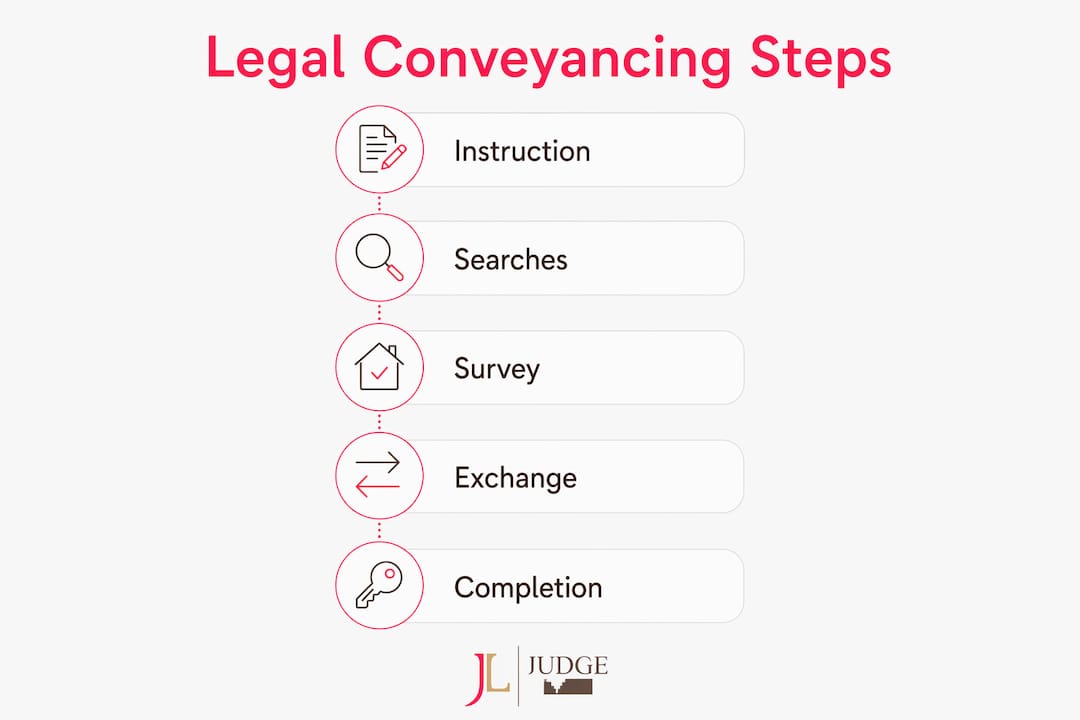
Conveyancing runs alongside your mortgage and survey stages, but it has its own distinct sequence. Each step builds on the last, and delays at any point can push back your completion date.
-
Offer accepted. Once the seller accepts your offer, you instruct your solicitor in writing. The seller’s solicitor sends a contract pack to your solicitor, which includes the draft contract, title documents, and property information forms completed by the seller.
-
Review of contract pack and property information forms. Your solicitor reviews the contract pack carefully. The property information forms tell you about boundaries, disputes, planning permissions, and any alterations made to the property. Your solicitor will flag anything that needs clarification.
-
Searches and enquiries. Your solicitor applies for searches with the local authority, water authority, and environmental agencies. These reveal planning constraints, flood risk, drainage responsibilities, and any local road schemes that could affect the property. Searches typically take two to six weeks depending on the local authority.
-
Raising enquiries. Based on the contract pack and search results, your solicitor raises formal enquiries with the seller’s solicitor. These are written questions seeking clarification on anything unclear or potentially problematic. The seller must respond before exchange can proceed.
-
Checking title and mortgage offer conditions. Your solicitor checks that the seller has good legal title to the property and that the title is free from any undisclosed charges or restrictions. Once your formal mortgage offer arrives, your solicitor checks its conditions and reports to you on both the title and the mortgage terms.
-
Exchange of contracts. This is the legally binding moment. Both parties sign identical contracts, a deposit is paid (typically 10% of the purchase price), and a fixed completion date is set. Until exchange, either party can withdraw without legal penalty. After exchange, withdrawal carries serious financial consequences.
-
Completion. On the agreed date, your solicitor transfers the purchase funds to the seller’s solicitor. Once received, the keys are released. Your solicitor then registers your ownership at HM Land Registry, making you the legal owner.
| Stage | Who acts | Typical timeframe |
|---|---|---|
| Contract pack received | Seller’s solicitor sends; buyer’s solicitor reviews | 1–2 weeks after offer |
| Searches applied | Buyer’s solicitor | 2–6 weeks |
| Enquiries raised and resolved | Both solicitors | 2–4 weeks |
| Mortgage offer received | Lender | Varies |
| Exchange of contracts | Both solicitors | When all is satisfactory |
| Completion | Buyer’s solicitor transfers funds | Agreed date after exchange |
Pro Tip: Keep a dedicated email folder for all correspondence from your solicitor. Responding promptly to requests for information or signatures is one of the most effective things you can do to keep your purchase on track.
What causes conveyancing delays and how do you avoid them?
Most conveyancing transactions take between eight and sixteen weeks from offer to completion, though complex cases take longer. Delays are common, and understanding their causes puts you in a better position to manage them.
- Slow search returns. Local authority searches are the most frequent source of delay. Some councils take several weeks to respond. Your solicitor can sometimes obtain personal searches as a faster alternative, though these carry slightly different risk profiles.
- Unresolved enquiries. If the seller cannot answer an enquiry satisfactorily, or if a title defect emerges, your solicitor must resolve it before exchange. Chasing the seller’s solicitor for responses is part of your solicitor’s job, but you can help by keeping pressure on the seller directly.
- Mortgage offer expiry. Mortgage offers typically last six months. If your transaction runs long, your offer may expire and require renewal. Alert your solicitor and mortgage broker if you think this is a risk.
- Property chains. If the seller is also buying another property, your transaction is linked to theirs. A delay anywhere in the chain affects everyone. Your solicitor cannot control other parties, but clear communication across all solicitors in the chain helps.
- New build purchases. These carry specific legal risks. New build solicitors check planning permissions for the whole development, deposit protection arrangements, warranty schemes such as NHBC, and developer-imposed exchange deadlines. Never rush a new build exchange without independent legal advice. The developer’s timeline is not your legal obligation.
Buyers remain in a ‘subject to contract’ state until exchange, meaning all terms can still change before you are legally bound. This period is your window for due diligence. Use it fully. Rushing to exchange before searches are complete or enquiries are resolved is the single most avoidable mistake in first-time buyer conveyancing.
Prompt responses to your solicitor cut transaction time meaningfully. When your solicitor asks for a document or a decision, treat it as urgent.
How do surveys and mortgages connect with the legal process?
The legal process, your survey, and your mortgage application run in parallel but serve distinct purposes. Understanding how they interact helps you manage the timeline without confusion.
A property survey provides condition information independent of the legal conveyancing process. It tells you about the physical state of the building. The legal process confirms who owns it and whether the title is clean. Both are necessary. Neither replaces the other.
Survey results can prompt renegotiation before exchange. If a Level 3 Building Survey reveals significant structural issues, you can ask the seller to reduce the price or carry out repairs before you commit legally. Because nothing is legally binding until exchange, you retain the right to withdraw or renegotiate at any point up to that moment.
| Element | Purpose | When it happens |
|---|---|---|
| Property survey | Assesses physical condition of the building | Shortly after offer accepted |
| Local authority searches | Reveals planning, environmental, and road issues | Applied for by solicitor after instruction |
| Formal mortgage offer | Confirms lender’s commitment to fund the purchase | After lender’s valuation |
| Exchange of contracts | Creates legal binding obligation on both parties | When all checks are satisfactory |
| Completion | Transfers ownership and funds | Agreed date post-exchange |
Your mortgage offer must be in place before exchange. Lenders attach conditions to offers, and your solicitor checks these carefully. A condition requiring certain repairs before drawdown, for example, must be resolved before you can legally commit to the purchase. Timing the parallel progression of survey, mortgage, and legal work is where an experienced solicitor adds real value.
What I have learned about first-time buyer conveyancing
The most common misconception I see is that the legal process is something that happens to you rather than something you actively participate in. First-time buyers often assume that once they have instructed a solicitor, they can step back and wait. That is not how it works.
Proactive communication with your solicitor genuinely speeds up transactions. Call, not just email, when something feels stuck. Ask for a status update every week or two. Your solicitor is managing multiple files simultaneously, and a brief, polite call is often enough to move yours up the priority list.
Independent legal advice matters most when the purchase is complex. New build contracts, shared ownership schemes, and properties with unusual title histories all carry risks that a first-time buyer is unlikely to spot without expert guidance. The legal steps for buying a new build differ meaningfully from a standard resale, and the consequences of missing a developer’s exchange deadline can be severe.
Prioritise due diligence over speed. The pressure to exchange quickly is real, particularly when you are in a chain or renting at significant cost. But exchanging before your solicitor is satisfied with the title, searches, and enquiries is a risk that rarely pays off. The legal protections built into the conveyancing process exist for your benefit. Let them work.
FAQ
What is conveyancing and why do first-time buyers need it?
Conveyancing is the legal transfer of property ownership from seller to buyer, handled by a solicitor or licensed conveyancer. Without it, you cannot legally own the property or register your title at HM Land Registry.
When does a property purchase become legally binding?
The purchase becomes legally binding at exchange of contracts, when both parties sign identical contracts and the buyer pays a deposit. Before exchange, either party can withdraw without legal penalty.
How long does the conveyancing process take for first-time buyers?
Most conveyancing transactions take between eight and sixteen weeks from offer acceptance to completion, though this varies depending on search times, enquiries, and whether the property is in a chain.
What happens on completion day?
Your solicitor transfers the purchase funds to the seller’s solicitor, the keys are released to you, and your solicitor registers your ownership at HM Land Registry. You are the legal owner from the moment funds are received.
Do I need a survey as well as a solicitor?
Yes. A survey assesses the physical condition of the property, while your solicitor handles the legal title and ownership checks. They serve different purposes and both are necessary for a fully informed purchase.