
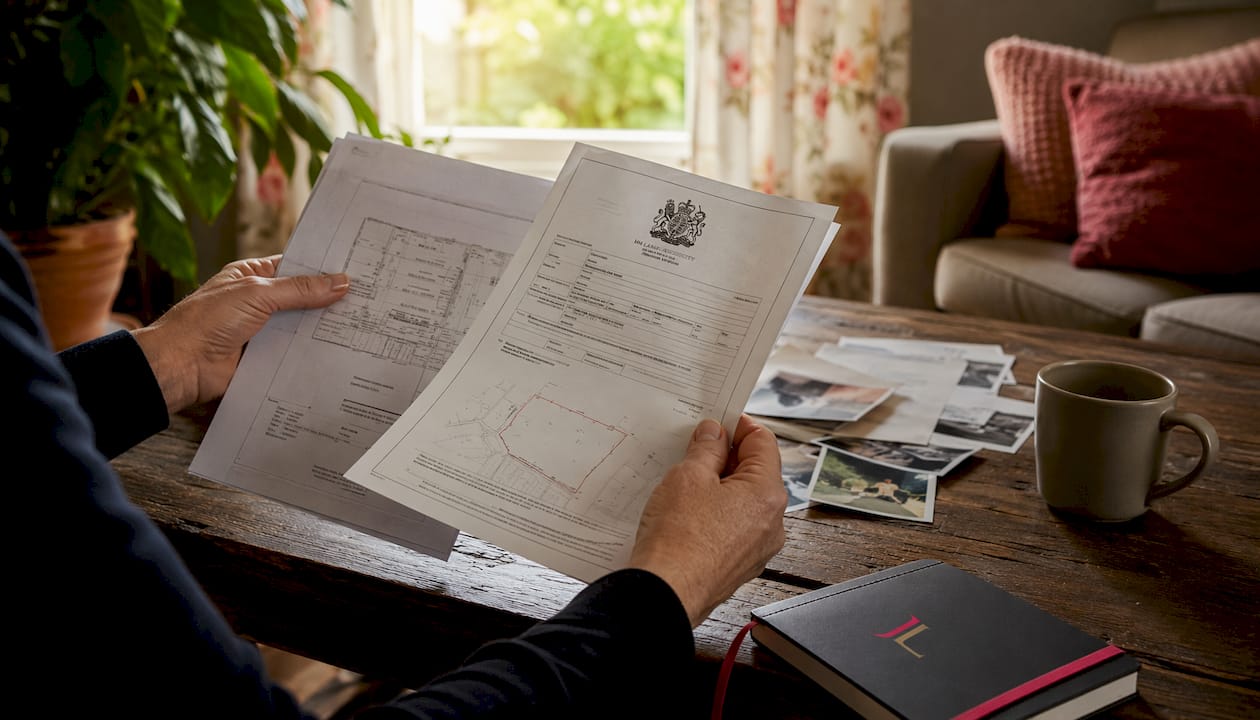
Selling your home in England and Wales takes about 5 months on average, according to GOV.UK, with the legal conveyancing stage alone usually running 10 to 14 weeks for a straightforward freehold sale. The process moves through six broad phases, and knowing what sits in each one is what separates a sale that runs smoothly from one that stalls at the worst possible moment.
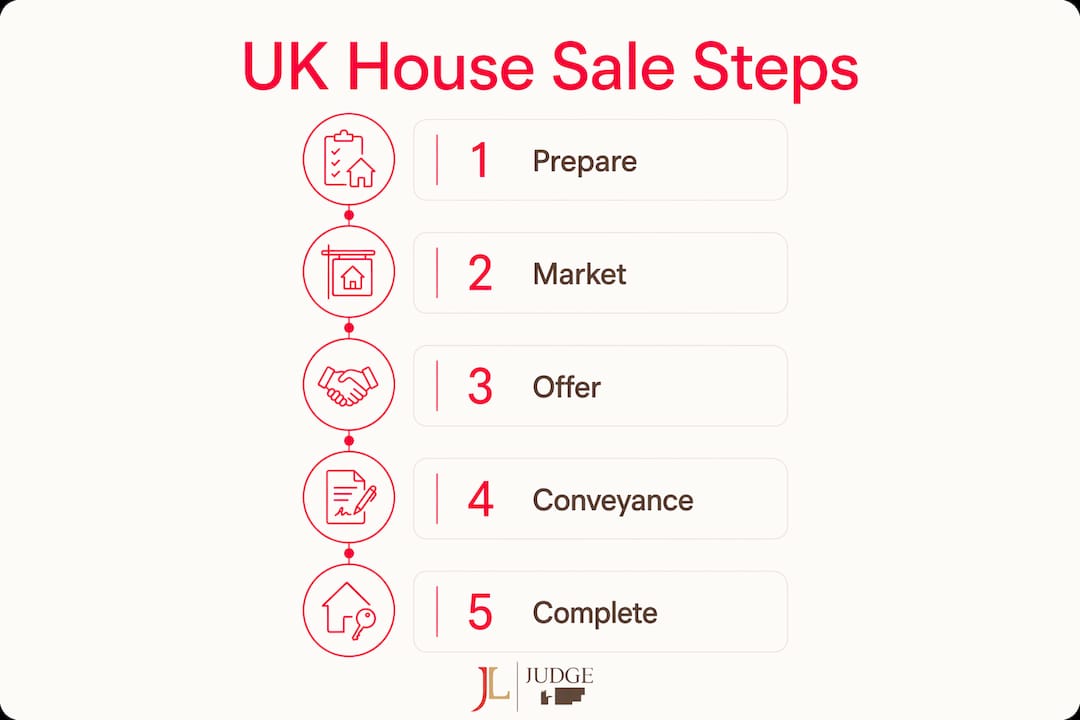
Here is the full sequence at a glance:
- Preparation. Gather paperwork, obtain an Energy Performance Certificate (EPC), and get the property ready for viewings.
- Valuation and pricing. Commission market valuations and set an asking price based on comparables.
- Marketing. Instruct an estate agent (or sell privately), list the property, and conduct viewings.
- Offers and negotiation. Receive, assess, and negotiate offers; accept one and remove the property from the market.
- Legal conveyancing. Instruct a solicitor, complete the TA6 Property Information Form and TA10 Fixtures and Fittings Form, respond to buyer enquiries, and progress toward exchange.
- Exchange and completion. Sign and exchange contracts with a 10% deposit paid, then transfer ownership on completion day.
Property chains are the single biggest source of delay. When your sale depends on your buyer’s purchase, and their purchase depends on another transaction, any one party stalling can pause the whole sequence. HM Land Registry registration, mortgage lender timelines, and survey results all feed into that chain. Understanding where the pressure points are gives you a real advantage before you even instruct an agent.
TL;DR
- Selling a home in England and Wales takes about 5 months on average, with conveyancing usually taking 10 to 14 weeks for a straightforward freehold sale.
- Gather your title documents, certificates and an EPC before the property is marketed.
- Instruct a solicitor early so the TA6 and TA10 forms are ready when a buyer is found.
- The sale becomes legally binding at exchange, when the buyer usually pays a 10% deposit.
- Property chains are the single biggest source of delay.
What are the steps to sell a home in the UK?
Conveyancing
Get an instant conveyancing quote
See your fixed-fee legal costs and Stamp Duty on screen in about a minute, with the full breakdown emailed to you. No obligation.
The process begins well before a buyer ever sets foot through your door. Getting the groundwork right at the start is what keeps the later legal stages from grinding to a halt.
Gathering your paperwork

Pull together your HM Land Registry title documents, any planning permissions for work carried out, building regulation completion certificates, gas and electrical safety reports, and guarantees for damp, subsidence, or specialist treatments. If you have FENSA or CERTAS certificates for windows, locate those too. Your solicitor will need all of this when they prepare the TA6 form, and having it ready from day one prevents the most common source of early delays.
You must order an EPC before you market the property. If your property already has one, check whether it is still within its ten-year validity period. If not, commission a new one through an accredited assessor on the government’s EPC register.
Choosing how to sell
Using a high-street or online estate agent gives you access to the major property portals, professional photography, and someone to manage viewings and negotiations on your behalf. Selling privately cuts agent fees but places the full burden of marketing, accompanied viewings, and offer management on you. For most sellers, the agent route is faster and less exhausting, though the fee structure varies considerably between agents, so compare terms carefully before signing.
An estate agent acts on your behalf and is legally required to inform you of every offer received, regardless of whether it falls below the asking price or arrives after you have already accepted another offer. That obligation protects you from an agent steering you toward a buyer who suits their interests rather than yours.
Setting the right asking price
Get at least three valuations from different agents and cross-reference them against recent sold prices for comparable properties in your area. Rightmove and Zoopla show listed prices; HM Land Registry’s sold price data shows what buyers actually paid. The gap between the two is often instructive. Pricing too high can leave a property sitting on the market long enough to attract suspicion; pricing too low leaves money on the table. A realistic asking price, grounded in evidence, tends to generate more competitive offers.
Preparing the property for sale
Presentation matters more than most sellers expect. Decluttering, repainting in neutral tones, attending to minor repairs, and ensuring the garden is tidy all contribute to a stronger first impression, both in photographs and in person. Professional photography is worth the cost. The majority of buyers begin their search online, and poor images filter a property out before a viewing is ever requested.
Marketing and viewings
Your estate agent will list the property on the major portals and arrange viewings. Accompanied viewings, where the agent attends rather than you, tend to allow buyers to speak more freely. Be prepared for feedback that is blunt. Negative comments about a room or a feature are useful data, not personal criticism, and they can inform whether a price adjustment or a minor improvement is warranted.
Handling and negotiating offers
When offers come in, resist the instinct to accept the first one simply because it is close to asking price. Consider the buyer’s position: are they chain-free? Do they have a mortgage in principle? A slightly lower offer from a cash buyer or a first-time buyer with no chain can complete faster and with less risk than a higher offer from someone whose own sale is still months away.
Once you accept an offer, remove the property from the market. Continuing to take viewings after acceptance signals uncertainty to your buyer and can destabilise the transaction before legal work has even begun.
How long does selling a house actually take?
The timeline below reflects a typical sale in England and Wales. Every transaction is different, and a property chain can extend each phase considerably.
| Phase | Typical duration | Key actions |
|---|---|---|
| Preparation and listing | Weeks 1–2 | EPC, paperwork, photography, agent instruction |
| Viewings and offers | Weeks 3–6 | Viewings, offer negotiation, acceptance |
| Conveyancing begins | Weeks 7–10 | Solicitor instructed, TA6 and TA10 forms completed |
| Buyer enquiries and searches | Weeks 10–16 | Solicitor responds to enquiries, survey arranged |
| Exchange of contracts | Weeks 16–20 | Contracts signed, 10% deposit paid, completion date fixed |
| Completion | Weeks 20–26 | Funds transferred, keys released, ownership transferred |
The 4 to 6 month total is a reasonable expectation for a straightforward sale. Conveyancing alone usually accounts for 10 to 14 weeks of that, and it rarely runs faster regardless of how motivated both parties are, because local authority searches, mortgage valuations, and enquiry responses all have their own timescales.
Property chains are where timelines become unpredictable. When your buyer is also selling, and their buyer is also selling, a delay anywhere in that chain halts the transfer of funds and ownership across every transaction until it is resolved. A single buyer who loses their mortgage offer or a seller who is not ready to vacate can push everyone’s completion date back by weeks.
Factors that commonly extend the timeline:
- Local authority searches taking longer than expected in certain areas
- The buyer’s mortgage lender requiring a full structural survey before releasing funds
- Enquiries raised by the buyer’s solicitor that require documentation you have not yet located
- A party in the chain withdrawing, requiring a new buyer to be found
- Disputes over fixtures and fittings not clearly covered in the TA10 form
What does the legal conveyancing process involve?
The legal side of selling a property is more involved than most people expect when they first accept an offer. It is also the stage where the sale can unravel if paperwork is incomplete or communication breaks down.
Instructing a solicitor
Appoint a solicitor or licensed conveyancer as soon as you decide to sell, not after you accept an offer. Early instruction means your solicitor can review your title documents, identify any issues with the register, and prepare the TA6 and TA10 forms before a buyer is even found. That head start can shave weeks off the conveyancing phase. For guidance on the legal steps involved, it helps to understand what your buyer’s solicitor will be doing in parallel.
Key documents you will need to complete
The TA6 Property Information Form covers everything from boundaries and disputes to planning history, guarantees, and any notices received from the local authority. The TA10 Fixtures and Fittings Form records precisely what is included in the sale and what you are taking with you. Both forms carry legal weight. Inaccurate or incomplete answers can expose you to a claim from the buyer after completion, so take them seriously and answer with care.
The TA6 and TA10 are the standard Law Society forms used under the Law Society’s Conveyancing Protocol, rather than forms required by law, and the buyer’s solicitor will scrutinise them closely before advising their client to proceed.
Buyer’s solicitor enquiries
After the buyer’s solicitor receives your title documents and completed forms, they will raise enquiries. These are formal questions about the property, the title, or the information you have provided. Some are standard; others arise from specific issues flagged by searches or the survey. Your solicitor will handle most responses, but some will require your direct input, particularly anything relating to works carried out, disputes with neighbours, or rights of way. Enquiries are raised throughout the process, sometimes at the last minute, and delays in responding are one of the most common reasons a transaction slows.
Exchange of contracts
Exchange is the point at which the sale becomes legally binding on both parties. Before exchange, either side can walk away without legal consequence, though doing so causes real disruption and cost. At exchange, both solicitors confirm their clients have signed identical contracts, the buyer pays a deposit (typically 10% of the purchase price), and a completion date is fixed. From that moment, you are committed.
Completion day
On completion day, the buyer’s solicitor sends the remaining funds via the CHAPS payment system. CHAPS is a same-day payment system, but in a chain the money passes between several solicitors in turn, so the exact moment of completion varies and often falls between midday and mid-afternoon. Your solicitor confirms receipt of funds, and only then are the keys released.
You must provide vacant possession, usually by 1pm, unless a different time has been agreed. Failing to vacate by the agreed time is a breach of contract and can result in financial penalties and legal claims. Completion is a transactional event. The official moment is when your solicitor confirms receipt of funds, not when the removal van pulls away.
Typical costs involved in selling:
- Estate agent fees (usually a percentage of the sale price)
- Solicitor or conveyancer fees for the legal work
- EPC commission (if a new certificate is required)
- Removal costs
- Potential early repayment charges if you are paying off a fixed-rate mortgage
- Capital Gains Tax if the property is not your primary residence
For a transparent breakdown of what legal fees to expect, Judge Law publishes its fee structure openly.
Conveyancing insights for a smoother sale
The sellers who reach completion with the least friction are almost always the ones who treated the legal preparation as seriously as the marketing. That sounds obvious, but in practice most people focus on presentation and pricing and leave the paperwork until a buyer is found.
Complete your TA6 and TA10 forms as soon as you instruct your solicitor, not when the buyer’s solicitor requests them. Every day those forms sit incomplete is a day added to the enquiry phase. If there are known issues with your title, such as a boundary discrepancy, an unregistered right of way, or a gap in your planning documentation, your solicitor can begin resolving them before a buyer is in the picture. Buyers and their solicitors notice unresolved issues, and they create anxiety that can kill a transaction.
Transparency about your timeline matters too. If you are part of a chain and you know your own purchase is likely to take longer than average, communicate that early. Signalling your commitment and being honest about timing keeps other parties in the chain from losing confidence and looking for alternatives.
Pro Tip: Appoint your solicitor before you accept an offer and ask them to review your title register immediately. Issues that take two weeks to resolve before a buyer is found would take six weeks to resolve once a buyer’s solicitor is pressing for answers.
Completion day in a chain is a cascade. Money moves from the first buyer upward through each set of solicitors in sequence, and any delay at one link pauses everyone above it. If you are mid-chain, keep your solicitor’s contact details to hand and be available by phone throughout the day. Delays are rarely catastrophic, but they are far less frightening when you understand why they happen.
The six-month rule is another point that catches sellers off guard. It starts from the date your name is registered with HM Land Registry, not from the date you completed your purchase. Some mortgage lenders will not lend to a buyer purchasing a property that has been owned for less than six months, which can restrict your pool of buyers if you are selling shortly after buying. Your solicitor can advise whether this applies to your situation and how to address it.
For a detailed look at why sales stall and what you can do about it, the Judge Law conveyancing timeline guide covers the most common causes of delay and practical ways to keep things moving.
FAQ
How long do solicitors take to process a house sale?
Conveyancing usually takes 10 to 14 weeks from instruction to completion for a straightforward freehold sale, and often 14 to 20 weeks for leasehold, though property chains and delayed enquiry responses can extend this. The total sale from listing to completion usually runs 4 to 6 months.
What is the procedure for selling a house in the UK?
The process runs from preparation and marketing through offer acceptance, legal conveyancing (including the TA6 and TA10 forms, buyer enquiries, and searches), exchange of contracts with a 10% deposit, and finally completion when funds transfer and ownership passes to the buyer.
What is the six-month rule when selling a property?
The six-month rule refers to the period starting from the date the seller’s name is registered with HM Land Registry. Some mortgage lenders will not advance funds to a buyer purchasing a property owned for less than six months, which can limit your buyer pool if you are selling shortly after buying.
Who moves first on completion day?
The buyer’s solicitor sends funds via CHAPS first, and the timing depends on how quickly money moves along the chain. Once your solicitor confirms receipt, keys are released. You are expected to have vacated the property, usually by 1pm, before that confirmation arrives.